Table of Contents
- Why 2026 Is the Year to Book Your Private Luxury Safari
- Best Time for a Luxury Safari 2026: Seasons, Migration, and Game Viewing
- Cost of a Private Luxury Safari in Africa: What Shapes the Price
- Exclusive Private Game Reserves vs. National Parks: Which Is Right for You
- How to Plan a Bespoke Safari Itinerary for 2026
- Travel Insurance, Medical Evacuation, and Safety Protocols
- Carbon-Neutral Travel and Post-Safari Wellness Extensions
- How to Choose a Reputable Safari Operator for Your 2026 Booking
Last Updated: August 3, 2026
Deciding to book a private luxury safari in 2026 is a significant investment requiring more than lodge photographs. At Acacia African Safaris, we help discerning travelers turn this investment into an experience that genuinely exceeds expectations. Below, we’ll show you exactly how to plan, time, and secure a bespoke safari itinerary that delivers on every promise, from exclusive game viewing to post-safari wellness extensions.
The key distinction: treat a private luxury safari as an experience you architect, not a product you purchase. This matters enormously in 2026, because availability at the finest private game reserves in East Africa is tightening faster than most travelers expect.
Why 2026 Is the Year to Book Your Private Luxury Safari
Demand for exclusive-use and ultra-luxury safari accommodation in East Africa has climbed steadily since 2023, and 2026 is shaping up as a particularly competitive booking year. Properties offering genuine private game reserve access, dedicated private guides, and all-inclusive pricing are filling peak-season calendars well in advance. If you’re targeting the Great Migration window or the dry-season sweet spot for big five game viewing, booking early is the difference between securing your preferred lodge and settling for something less.
Booking Windows and 2026 Availability Alerts
For peak-season travel between July and October 2026, many ultra-luxury tented camps and exclusive-use lodges require bookings six to twelve months in advance. Green-season travel (November through April) offers more flexibility, but the best properties still fill up three to six months out.
Practical steps to stay ahead of availability:
- Contact your safari operator directly for real-time 2026 availability alerts for specific properties
- Confirm whether a deposit secures a provisional hold before full payment is required
- Ask about waitlist policies for sold-out dates at your preferred lodge
- Build in at least two alternative destination options to keep your itinerary viable
Ask your operator whether their partner lodges offer a provisional hold period before committing a deposit. Some properties in [Tanzania’s northern circuit](/destination/serengeti/) hold space for up to 14 days without payment, giving you time to finalize travel insurance and international flights.
Best Time for a Luxury Safari 2026: Seasons, Migration, and Game Viewing
The best time for a luxury safari in 2026 depends entirely on what you want to witness. East Africa’s calendar is shaped by seasonal migration cycles that produce dramatically different experiences depending on the month you arrive.
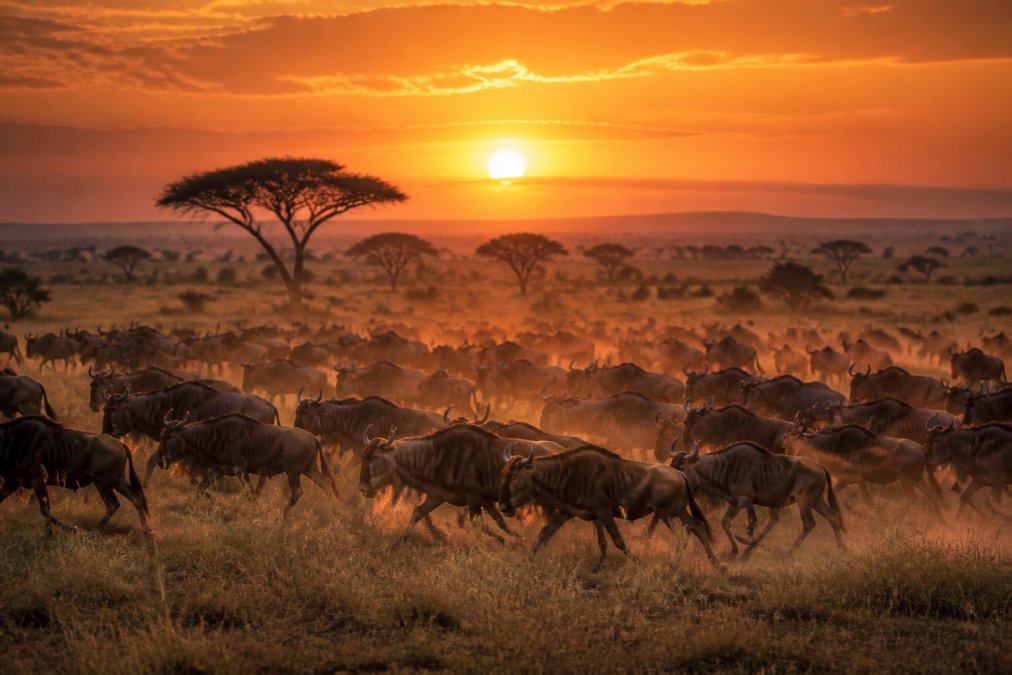
The Great Migration sees roughly 1.5 million wildebeest and hundreds of thousands of zebra moving in a continuous loop between Tanzania and Kenya. According to the Serengeti National Park’s official wildlife calendar, river crossings occur primarily between July and September in the Masai Mara and northern Serengeti.
Peak Season vs. Green Season: What Each Delivers
Peak season (July-October) offers dry conditions, sparse vegetation that makes wildlife easier to spot, and the highest concentration of big five sightings. Green season (November-April) delivers lush landscapes, newborn animals, exceptional birdwatching, and meaningfully lower pricing. The rains thin crowds at national parks without significantly disrupting game viewing at private reserves, where off-road driving access gives guides far more flexibility.
| Season | Months | Game Viewing | Migration Events | Typical Availability |
|---|---|---|---|---|
| Peak / Dry | July – October | Excellent | River crossings (north) | Books earliest |
| Short Rains | November | Very good | Calving begins (south) | Moderate |
| Green / Wet | December – April | Good to very good | Calving season | More flexible |
| Late Green | May – June | Excellent | Pre-migration build-up | Good value |
May and June are arguably the most underrated months on the East African safari calendar. The long rains end, the grass is still green, and game viewing is exceptional with a fraction of peak-season crowds.
Cost of a Private Luxury Safari in Africa: What Shapes the Price
The cost of a private luxury safari is shaped by destination remoteness, lodge exclusivity, the number of travelers sharing a vehicle, and the season. At the ultra-luxury end, genuine all-inclusive packages cover accommodation, all meals, game drives, a private guide, a private vehicle, bush flights between destinations, and park fees.
For current pricing tailored to your specific dates, group size, and destination combination, contact Acacia African Safaris directly to request a detailed quote.
Per Person Per Night Breakdown: What Is Included
A transparent per-person-per-night rate at a genuine ultra-luxury property should include:
- All meals, including bush breakfasts and sundowner drinks
- Twice-daily game drives in a private vehicle with a dedicated guide
- National park or conservancy fees
- Laundry service
- Wi-Fi where available
- Airport transfers within the circuit
What is typically excluded: international flights, visa fees, travel insurance, gratuities, and premium spirits or wines beyond a standard selection. Always request a full inclusions list before comparing rates between properties.
Exclusive-Use vs. Shared Private Reserve: Cost Comparison
Exclusive-use bookings, where your group takes over an entire camp or lodge, offer maximum privacy and itinerary flexibility. Shared private reserve access delivers similar game viewing quality at lower per-person cost.
| Option | Privacy Level | Itinerary Flexibility | Best For |
|---|---|---|---|
| Exclusive-use camp | Maximum | Complete control | Families, milestone events |
| Shared private reserve | High | Very good | Couples, solo travelers |
| Private concession in national park | High | Good | Migration-focused itineraries |
| Standard national park lodge | Moderate | Limited | Budget-conscious luxury |
Do not confuse “private lodge” with “private game reserve.” A private lodge inside a national park shares the park with all other visitors and cannot offer off-road driving. A true private game reserve operates under its own land management rules, enabling exclusive game viewing and night safaris.
Exclusive Private Game Reserves vs. National Parks: Which Is Right for You
National parks like the Serengeti and Amboseli offer iconic landscapes and the best access to seasonal migration patterns. They are also subject to shared road access, which means game drives can involve other vehicles at popular sightings. Activities are generally restricted to daytime game drives.
Private game reserves and conservancies operate under their own land-use agreements, enabling night game drives, off-road tracking, walking safaris with armed rangers, and uninterrupted wildlife encounters. When a pride of lions settles in for an afternoon, your private guide can stay with them as long as you want, without pressure to move on for the next group.
For most travelers planning a bespoke itinerary: combine both. Spend time in a private conservancy adjacent to a national park and you access the best of each. Tanzania’s northern circuit allows itineraries that move between the Serengeti ecosystem and private conservancies in a single trip, connected by bush flights that eliminate long road transfers.
How to Plan a Bespoke Safari Itinerary for 2026
A bespoke safari itinerary starts with your specific travel goals and works backward to select destinations, properties, and experiences that serve those goals.
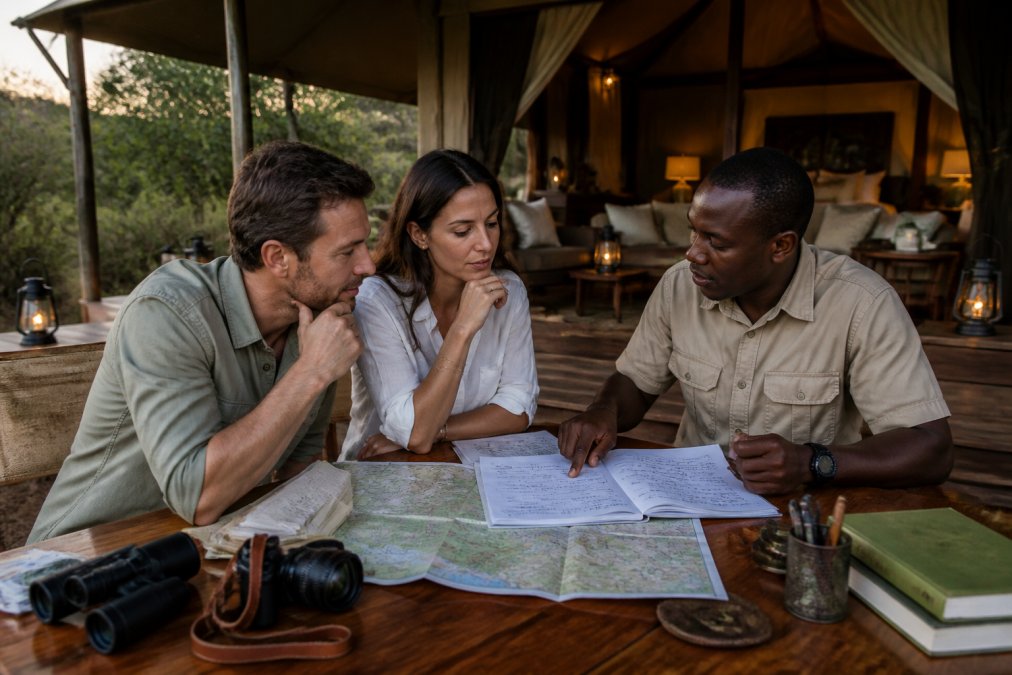
Step 1: Define Your Travel Goals and Non-Negotiables
Before any destination or lodge is selected, be specific about what success looks like. A family with teenagers who want an educational, hands-on experience has different priorities than a couple celebrating an anniversary who want total privacy and bush dining under the stars. Write down your non-negotiables: the experiences you would feel the trip was incomplete without.
Common non-negotiables worth articulating clearly:
- A specific wildlife event, such as witnessing a river crossing
- Accommodation style, such as tented camp versus stone lodge
- Activity preferences, such as walking safaris, night drives, or cultural visits
- Pace, meaning whether you want to stay in one location or move between multiple destinations
- Group dynamics, such as whether children need specific activity options
Step 2: Choose Your Destinations and Fly-In Logistics
Multi-destination itineraries in East Africa work best when connected by bush flights rather than long road transfers. A fly-in safari approach using small aircraft to move between remote airstrips keeps travel time short and maximizes time in the wilderness. Tanzania’s northern circuit can connect the Serengeti, Ngorongoro Crater, and Tarangire in a single itinerary without a full day lost to road travel. Bush flights require planning around weight limits (typically 15 kilograms of soft luggage per person) and weather-dependent schedules that can shift during the green season.
Step 3: Select Ultra-Luxury Lodges and Tented Camps
The best ultra-luxury tented camps and lodges share genuine remoteness, a low guest-to-guide ratio, and a conservation ethic that shapes how the property operates. Properties like Whispering Acacia and The Singing Grass combine 3-5 star accommodation standards with curated experiences, including night safaris and private bush dining, shaped entirely around each guest’s pace.
The single most important quality signal in a luxury lodge is the guide-to-guest ratio. One guide per vehicle and genuinely knowledgeable naturalists transform a game drive into an education you remember for years.
Step 4: Confirm Deposit Policy, Flexibility, and Cancellation Terms
Deposit policy and cancellation terms vary significantly between properties and operators. Most ultra-luxury lodges in East Africa require a deposit of 25-50% at booking, with the balance due 60-90 days before arrival. Cancellation penalties typically escalate the closer you get to your travel dates.
Ask your operator these specific questions before committing:
- What is the cancellation policy at each property on the itinerary?
- Is the deposit transferable to alternative dates if your plans change?
- Does the operator offer a force-majeure clause for events outside your control?
- What happens to your deposit if a specific property becomes unavailable?
Travel Insurance, Medical Evacuation, and Safety Protocols
Travel insurance and medical evacuation coverage are foundational logistics for a remote safari, not optional considerations. East Africa’s finest private game reserves are, by definition, far from major hospitals. Comprehensive coverage is a non-negotiable part of responsible itinerary planning.
According to the Foreign, Commonwealth and Development Office’s travel advice for Tanzania, travelers to Tanzania should ensure their insurance policy explicitly covers medical evacuation by air, as road access to remote areas can be significantly limited, particularly during the green season.
Key coverage areas to confirm before departure:
- Medical evacuation by air to a facility capable of treating serious injuries or illness
- Trip cancellation and curtailment, covering the full cost of your itinerary
- Emergency repatriation to your home country
- Activity-specific coverage that includes game drives, walking safaris, and light aircraft travel
- 24/7 emergency assistance line with operators experienced in East Africa logistics
Standard travel policies sold by airlines and credit card providers frequently exclude medical evacuation from remote areas. Read the exclusions section carefully.
Carbon-Neutral Travel and Post-Safari Wellness Extensions
Conscious travelers planning a luxury safari in 2026 are increasingly asking about carbon footprint and how operators address it. Carbon-neutral travel logistics typically involve direct carbon offsetting through verified programs, support for community-based conservation projects, and operational choices at the lodge level, such as solar power, waste management, and locally sourced food. When evaluating an operator’s sustainability claims, ask for specifics: which offset program do they use, is it independently verified, and what percentage of their supply chain is locally owned?
Post-safari wellness extensions represent one of the most natural ways to extend the restorative quality of a wilderness experience. Zanzibar, reachable by a short flight from Tanzania’s northern circuit, offers beaches, spa facilities, and a complete change of pace. Rwanda’s gorilla trekking pairs naturally with a wellness retreat in the Virunga region. The Global Sustainable Tourism Council’s criteria for sustainable tourism operators provide a useful framework for assessing whether an operator’s sustainability commitments are substantive.
How to Choose a Reputable Safari Operator for Your 2026 Booking
Choosing the right safari operator is the single decision that determines whether every other element of your trip works. The operator controls the quality of your guide, the integrity of the properties they recommend, their responsiveness when something goes wrong, and the accuracy of the experience they described.
The more revealing questions are operational: How does the operator handle a flight delay that causes you to miss a connection to a remote airstrip? What is their protocol if the accommodation you booked does not meet the standard they described? Do they have a 24/7 support line staffed by people who actually know the region, or a call center that escalates to an email queue?
Acacia African Safaris builds its reputation on exactly these operational details: seamless airport transfers, 24/7 direct contact support, and the flexibility to adjust routes and add optional excursions mid-trip when conditions or preferences change. For solo female travelers in particular, the quality of on-the-ground support is the primary consideration.
Practical criteria for evaluating any safari operator:
- Membership in a recognized East African tourism body, such as the Tanzania Association of Tour Operators
- A portfolio of specific lodges and properties they work with, not vague “luxury accommodation” descriptions
- Transparent deposit and cancellation policies provided in writing before you commit
- A named contact person, not just a generic inquiry form
- Evidence of conservation partnerships and community engagement
- The ability to provide references from travelers with similar profiles to yours
An operator who listens carefully to your goals, concerns, and non-negotiables before proposing anything is building something specific to you, not slotting you into a template.
Planning a private luxury safari requires navigating a complex set of decisions across timing, logistics, accommodation, insurance, and operator quality. Acacia African Safaris specializes in building completely personalized, tailor-made itineraries for discerning travelers, combining exclusive stays at properties like Whispering Acacia and The Singing Grass with seamless airport transfers, 24/7 direct support, and the flexibility to shape every detail around your pace and priorities. Request information from Acacia African Safaris and start building the 2026 safari experience that is genuinely yours.
Frequently Asked Questions
How far in advance should I book a private luxury safari in 2026?
For a private luxury safari in 2026, booking 12 to 18 months ahead is strongly advisable. Exclusive-use properties and premium tented camps at top East African reserves fill quickly, particularly for peak migration season between July and October. Booking early also gives your safari operator time to build a fully tailor-made itinerary, secure preferred fly-in bush flight slots, and lock in your preferred lodge combinations before availability closes.
What is the best time of year for a luxury safari in 2026?
The best time for a luxury safari in 2026 depends on your priorities. July through October delivers the Great Migration river crossings in the Serengeti and Masai Mara, with dry conditions ideal for game viewing. January through March offers the calving season in the southern Serengeti and fewer crowds. The green season, November through April, brings lush landscapes, lower per person per night rates at some lodges, and excellent birdwatching across East Africa.
What does the cost of a private luxury safari in Africa actually cover?
Pricing for a private luxury safari in Africa varies based on destination, season, lodge tier, group size, and itinerary length. All-inclusive rates typically cover accommodation, meals, private guide fees, game drives in a private vehicle, and some bush activities. Bush flights, park fees, gratuities, travel insurance, and medical evacuation cover are usually quoted separately. Contact Acacia African Safaris directly for a personalised quote reflecting your specific dates and preferences.
What are the benefits of a private safari versus a group tour?
A private safari gives you exclusive use of a vehicle and a dedicated guide, meaning game drives run entirely on your schedule. You can spend as long as you want observing a lion pride or a leopard in a tree without pressure to move on. Private itineraries are fully customizable around your interests, whether that is the Big Five, birding, cultural visits, or conservation activities. Group tours follow fixed schedules and shared priorities, which rarely suit high-net-worth travelers seeking an immersive, unhurried experience.
Which African countries offer the best private luxury safari experiences?
Tanzania and Kenya consistently rank among the top destinations for private luxury safaris in East Africa. Tanzania offers the Serengeti, Ngorongoro Crater, and Ruaha, with remote access to off-the-beaten-path wilderness areas. Kenya provides the Masai Mara and Laikipia plateau, known for exceptional private game reserves. Both countries have well-established fly-in safari infrastructure, ultra-luxury lodge options, and strong wildlife conservation frameworks that protect the ecosystems guests come to experience.
Do I need travel insurance for a luxury safari, and does it cover medical evacuation?
Comprehensive travel insurance is essential for any private luxury safari in East Africa. Standard policies often do not include medical evacuation, which can be critical in remote wilderness areas far from hospital facilities. Look for a policy that explicitly covers emergency air evacuation and repatriation. Acacia African Safaris can advise on appropriate cover for your itinerary. Confirm all insurance details before finalising your booking, and keep policy documents accessible throughout your trip.
This article was written using GrandRanker


