
Table of Contents
- What Makes a Private Safari Different
- Define Your Private Safari Goals and Timeline
- How to Lock Private Tabs on iPhone and Secure Your Bookings
- Is Private Browsing Safe When Researching Safari Operators
- Safari Private Browsing vs Normal: Which to Use for Planning
- Select Exclusive Accommodations and Curate Your Experiences
- Finalize Logistics and Confirm Your Private Safari Details
- Conclusion
What Makes a Private Safari Different
A private safari fundamentally changes how you experience wildlife and the African landscape. Unlike group tours where you’re bundled with 15-20 strangers in shared vehicles, a private safari puts you in control of your pace, your route, and your moments. You decide whether to spend three hours watching a pride of lions or move on after 20 minutes. You choose when to stop for photographs, when to rest, and when to explore cultural encounters that matter to you.
The difference extends beyond flexibility. Private safaris eliminate the compromises inherent in group dynamics. No one’s rushing you through a sighting because the next group is waiting. No one’s talking loudly during a critical wildlife moment. The guide works for you, not for a rotating roster of passengers. At Acacia African Safaris, we’ve built our entire approach around this principle: your safari should reflect your interests, your pace, and your vision for what an African adventure means.
What most guides get wrong is treating private safaris as merely “group tours with fewer people.” The real distinction lies in complete personalization. A private safari lets you adjust your itinerary mid-trip based on wildlife activity, weather, or simply because you’ve discovered something unexpected that fascinates you. This flexibility transforms a planned experience into a living, breathing adventure shaped by what actually unfolds.
The biggest advantage most travelers overlook: private safaris let you ask “why” questions without worrying about holding up 20 other people. Your guide becomes an educator, not a timekeeper. This depth of engagement is impossible in group settings, no matter how small the group.
Define Your Private Safari Goals and Timeline
Start by articulating what a private safari actually means to you. Are you seeking wildlife photography opportunities? Cultural immersion with local communities? A romantic milestone celebration? Educational experiences for teenagers? Each goal shapes everything that follows: accommodation choices, vehicle type, guide expertise, seasonal timing, and daily rhythm.
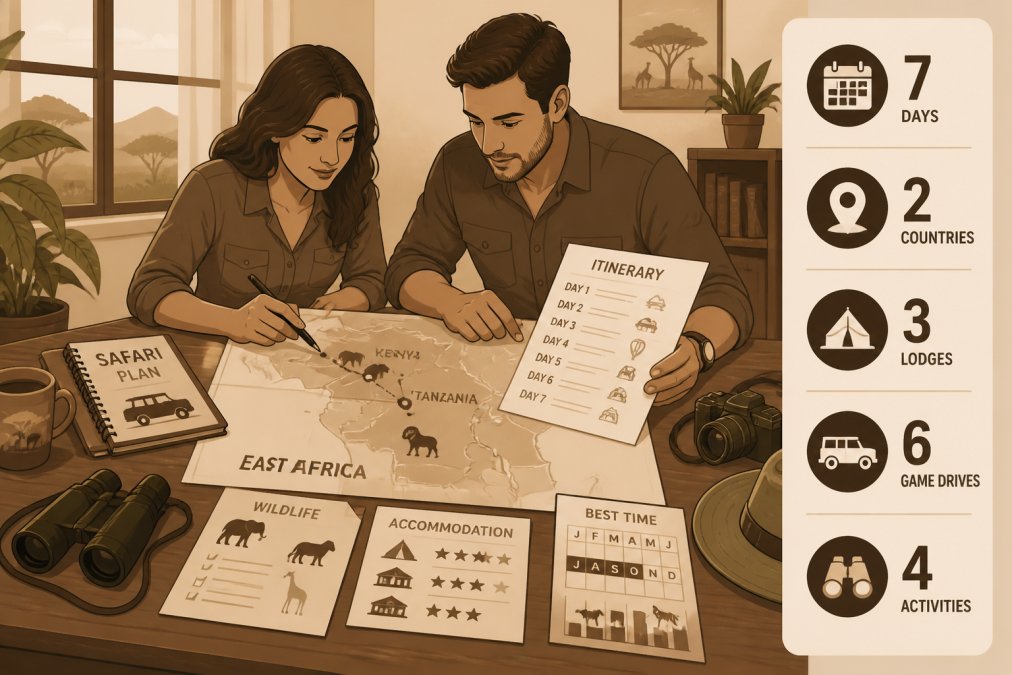
Timeline decisions matter more than most travelers realize. East Africa’s wildlife patterns shift dramatically across seasons. The dry season (June-October) concentrates animals around water sources, making sightings more predictable. The wet season (November-May) brings lush landscapes, fewer tourists, and different wildlife behavior. If you’re targeting specific animals or seasonal phenomena, the wildebeest migration, calving season, or bird arrivals, your timeline becomes non-negotiable.
Consider how long you need to truly settle into the experience. Many travelers underestimate this. A 3-day private safari feels rushed; you spend the first day acclimating, the second getting comfortable, and the third leaving. A 5-7 day private safari allows genuine immersion. You experience multiple weather patterns, different wildlife behaviors across times of day, and enough downtime to absorb what you’re witnessing rather than constantly chasing the next sighting.
Budget your planning timeline realistically. Crafting a truly personalized private safari, not a templated itinerary with minor tweaks, requires detailed conversations about your preferences, constraints, and non-negotiables. This isn’t something that happens in a single email exchange. Allow 4-8 weeks for genuine planning if you’re targeting peak season, longer if you have specific requirements.
The most successful private safaris start with clarity about what you actually want, not what you think you should want. “See lions” is different from “photograph lions in golden light” is different from “understand lion behavior.” Each requires different planning.
How to Lock Private Tabs on iPhone and Secure Your Bookings
When you’re planning a private safari and researching operators, you’re handling sensitive information: payment details, passport numbers, travel dates, and personal preferences. Using private browsing on your iPhone protects this data from being stored in your browsing history or cached by your device.
To enable private browsing on iPhone, open Safari and tap the tabs icon (two overlapping squares) at the bottom right. Then tap “Private” and confirm. A dark interface signals you’re now in private browsing mode. Any tabs you open won’t be saved to your history, and Safari won’t store cookies or cache from those sessions. This is particularly useful when booking accommodations or entering payment information on shared devices.
However, understand what private browsing actually protects and what it doesn’t. Private tabs prevent your device from storing your web activity locally. They don’t encrypt your connection, that’s what HTTPS does. Your internet service provider can still see which websites you visit. Your employer’s network can still monitor your activity if you’re on their Wi-Fi. Safari’s private browsing shields you from local device tracking, not network-level visibility.
When finalizing bookings with safari operators, private browsing adds a layer of security, but it’s not a substitute for other precautions. Use it alongside password managers, strong unique passwords for each booking platform, and two-factor authentication where available. Many safari operators now offer secure booking portals with encryption built in, verify this before entering payment information.
A common mistake: assuming private browsing makes you anonymous online. It doesn’t. It only prevents your device from storing local records. Use it for sensitive bookings, but combine it with other security practices like checking for HTTPS connections and avoiding public Wi-Fi for payments.
Is Private Browsing Safe When Researching Safari Operators
Private browsing is safe for researching safari operators, but with important caveats. It prevents your device from storing which operator websites you visited, which operator reviews you read, or which pricing pages you viewed. This protects your privacy from anyone with physical access to your iPhone.
However, private browsing doesn’t protect you from the operators themselves or from network monitoring. When you visit a safari operator’s website in private mode, that operator’s servers still log your visit, your IP address, and your interactions. They can still track you through cookies (though private tabs don’t store them after you close them). Your internet service provider can still see you visited that domain.
The real safety question isn’t whether private browsing protects you, it’s whether you’re visiting legitimate operator websites. Research operators through multiple channels: industry associations, travel publications, and customer reviews on independent platforms. Verify phone numbers and contact information through official tourism boards rather than clicking links from search results. Legitimate operators maintain transparent websites, clear contact information, and verifiable credentials.
Private browsing is safe for this research phase, but it’s not a substitute for due diligence. Check operator websites for security indicators: HTTPS connections (look for the padlock icon), clear privacy policies, and transparent terms. Read reviews across multiple platforms, not just the operator’s own website. Ask for references from previous travelers. These practices matter far more than whether you use private tabs.
Travelers who share devices with family members or who prefer to keep their safari planning private from household members. Private browsing prevents your iPhone from storing which operators you researched or which prices you viewed.
Safari Private Browsing vs Normal: Which to Use for Planning
The choice between private and normal browsing depends on what data you want your device to retain. Normal browsing stores your history, cookies, and cache. This means Safari remembers which operator websites you visited, saves your login sessions, and speeds up repeat visits by caching data. It’s convenient if you’re planning solo and don’t share your device.
Private browsing doesn’t store any of this. Each time you close a private tab, Safari forgets you visited that website. Cookies are deleted. Login sessions end. Cache is cleared. This creates friction, you’ll re-enter passwords and reload pages, but it protects your privacy if others use your device.
For safari planning specifically, the decision depends on your situation. If you’re planning alone on a personal device, normal browsing is fine. You’ll benefit from Safari remembering your operator comparisons and saved passwords. If you share your iPhone with a partner or family member and want to keep your planning confidential, private browsing prevents them from seeing your browsing history.
The distinction between private and normal browsing also matters for data persistence. Normal browsing allows websites to store local data, preferences, saved items, partially filled forms. Private browsing blocks this. If you’re comparing multiple operators and want Safari to remember your preferences across sessions, normal browsing is more practical. If you’re concerned about local storage of your activities, private browsing is the safer choice.
Many travelers use a hybrid approach: normal browsing for general research and comparison, private browsing specifically when entering payment information or accessing booking confirmation pages. This balances convenience with security, protecting your most sensitive data while maintaining the efficiency of normal browsing for earlier research phases.
Select Exclusive Accommodations and Curate Your Experiences
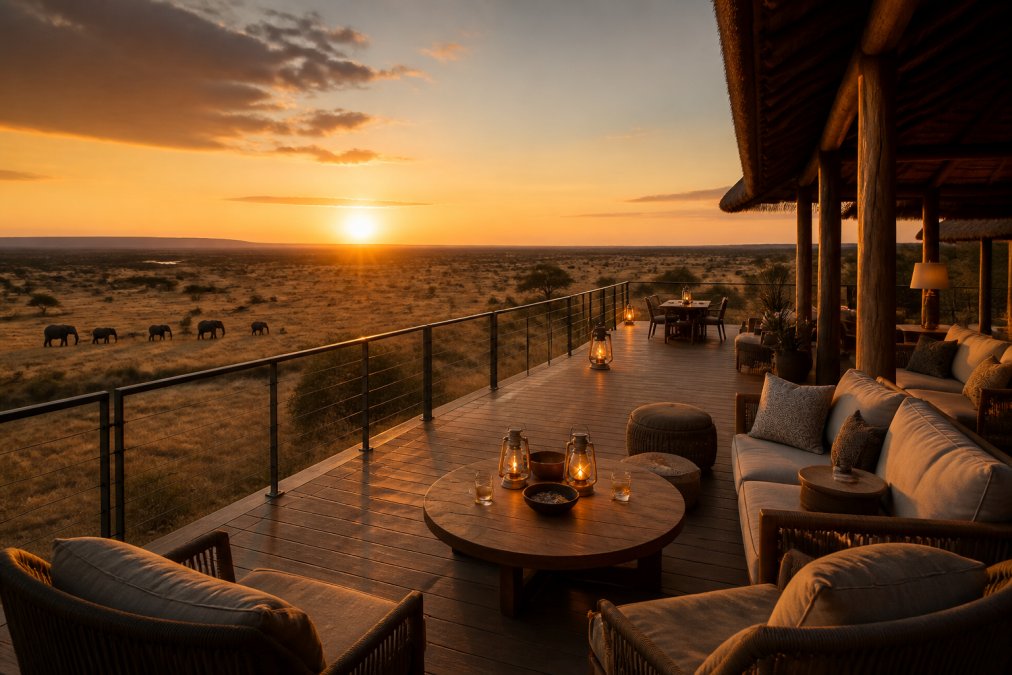
Accommodation choices define the rhythm and comfort level of your entire private safari. Luxury lodges like Whispering Acacia offer 3-5 star amenities: private suites with en-suite bathrooms, fine dining, and often Wi-Fi connectivity. These properties provide elevated comfort after days in vehicles, with spaces designed for relaxation and reflection. However, they also anchor your experience to a specific location, limiting flexibility in following wildlife or exploring different ecosystems.
Tented camps offer a different experience: closer proximity to the landscape, more intimate connection with your environment, and greater flexibility to relocate based on wildlife activity. Premium tented camps provide genuine comfort, proper beds, heating, en-suite facilities, without the infrastructure constraints of permanent lodges. The choice between lodge and camp isn’t about luxury; it’s about what kind of immersion you want.
Curating experiences means moving beyond standard game drives. Night safaris reveal nocturnal wildlife invisible during daylight hours. Bush dinners under stars create moments that transcend typical safari experiences. Cultural visits to local communities add context and perspective. Photography sessions with guides trained in composition and light. Walking safaris that slow your pace and sharpen your attention. These curated elements transform a private safari from “seeing animals” into a deeply personal journey.
Work with your operator to design daily rhythms that match your energy and interests. Some travelers want early morning drives followed by afternoon rest and evening activities. Others prefer flexible schedules that adjust based on wildlife sightings. Some want intense activity; others want substantial downtime. A truly personalized private safari accommodates these preferences rather than forcing you into a standard schedule.
Acacia African Safaris specializes in this curation. We design itineraries around your specific interests, whether that’s wildlife photography, conservation education, cultural immersion, or romantic experiences. Our team adjusts routes in real-time based on wildlife activity and weather, and we incorporate exclusive experiences like night safaris and bush dining that elevate your journey beyond typical safari itineraries.
Finalize Logistics and Confirm Your Private Safari Details
Logistics transform a beautiful plan into a functioning reality. Confirm every detail: flight times, airport transfers, accommodation check-in procedures, daily activity schedules, meal arrangements, and emergency contacts. Ambiguity creates stress; clarity creates confidence.
Airport transfers matter more than many travelers realize. Arriving exhausted after long international flights, then navigating unfamiliar airports and arranging ground transportation, sets a poor tone for your entire experience. Seamless airport pickup, someone meeting you with a sign, handling luggage, and delivering you directly to your accommodation, eliminates this friction. This is where 24/7 support becomes essential. If your flight is delayed, if you have questions upon arrival, if something goes wrong, you need immediate access to someone who can help.
Confirm accommodation details: room types, amenities, Wi-Fi availability, meal arrangements, and any special requests. Discuss dietary requirements, mobility considerations, and preferences for room location. Ask about recent renovations, room views, and realistic expectations. This prevents disappointment when you arrive.
Clarify daily schedules and activity flexibility. How early do morning drives start? How long are afternoon drives? When are meals? What’s the protocol if you want to deviate from the planned schedule? Can you request additional activities? The best operators build flexibility into their logistics rather than treating itineraries as fixed.
Discuss payment and cancellation policies clearly. Understand what’s included: meals, activities, transfers, gratuities, travel insurance. Understand what’s not included. Know cancellation terms and whether travel insurance is recommended or required. These conversations prevent surprises and ensure you’re making informed decisions.
Finally, prepare practical details: visa requirements, vaccinations, currency, packing lists, and weather expectations. Confirm communication options, how will you stay in touch with family while away? Will your accommodations have reliable internet? Do you need an international phone plan? These logistics seem minor until they’re problems.
Conclusion
Planning a private safari requires moving beyond typical vacation planning into genuine personalization. It demands clarity about what you actually want, careful selection of operators who understand your vision, and attention to logistics that transform plans into reality. The difference between a good safari and an unforgettable one lies in this deliberate planning.
At Acacia African Safaris, we approach every private safari as a unique journey shaped entirely by your interests and pace. Our completely personalized itineraries, exclusive accommodations like Whispering Acacia, and seamless 24/7 support ensure your safari unfolds exactly as you envision it. From flexible route adjustments to curated experiences like night safaris and bush dining, we handle the complexity so you experience only the wonder. Request Info today and begin planning the private safari that becomes the defining adventure of your life.
Frequently Asked Questions
How do I plan a private safari that feels truly personalized and not rushed?
A genuine private safari starts with a detailed conversation about your pace, interests, and non-negotiables. Work with operators who adjust routes based on real-time wildlife activity and your preferences rather than fixed schedules. Request flexible daily itineraries that allow you to spend as long as you want watching a pride of lions or tracking elephants without pressure to move on. Confirm in writing that your guide answers to you, not a set timetable.
What’s the difference between Safari private browsing vs normal when booking your trip online?
Private browsing prevents your browser from storing browsing history, cookies, and search data locally on your device, which protects your session data during sensitive bookings. Normal browsing leaves a digital footprint of every site you visit. For safari research and payment, private browsing is safer because it doesn’t cache authentication credentials or retain records of pricing pages you viewed. However, private browsing alone doesn’t hide your IP address or network traffic from your internet service provider or the websites themselves.
Is private browsing safe when entering payment details for a safari booking?
Private browsing adds a layer of protection by not storing your browsing history or cookies locally, but it does not encrypt your data or hide your activity from the website or your ISP. For maximum security during payment, ensure the booking site uses HTTPS encryption (look for the padlock icon), use a reputable operator’s official website rather than third-party resellers, and consider using a VPN alongside private browsing for additional network-level protection of your online anonymity.
How do I lock private tabs on iPhone to prevent accidental access to my safari itinerary?
On iPhone, open Safari and swipe up from the bottom to access Tab Groups. Create a private tab group by tapping the tab count icon, then ‘Private’ to enable private browsing. To lock access, go to Settings > Safari > Advanced > Private Browsing and ensure it’s enabled. You can also use Face ID or passcode protection by enabling Settings > Face ID & Passcode > Apps. While Safari doesn’t offer a dedicated lock for individual tabs, using a private tab group combined with device-level security prevents unauthorized viewing of your personalized itinerary details.
This article is written by Saad Syed


