Table of Contents
- Is It Safe for Solo Females on Safari?
- Safari Safety Tips for Women: Before You Go
- Choosing a Reputable Safari Operator
- Private vs Group Safari for Solo Travelers
- Tanzania Safari Cost and Budget Planning
- Safety in the Field: Lodge, Vehicle, and Bush Protocols
- Digital Safety, Connectivity, and Financial Protection
- Cultural Sensitivity and Local Customs
Last Updated: August 17, 2026
Is It Safe for Solo Females on Safari?
Yes, it’s safe for solo females on safari when you work with a reputable tour operator, follow established safety protocols, and prepare thoroughly. Thousands of solo female travelers complete African safaris each year without incident. What separates a smooth experience from a stressful one comes down to three factors: choosing an operator with a proven track record prioritizing solo traveler safety, understanding the actual risks you’ll face, and preparing logistically and mentally for the adventure.
The key difference between a safari and other solo travel is that you’re not navigating independently. You’re in a vehicle with a professional guide, staying at established lodges or camps, and following structured itineraries. This structured environment, when managed by a competent operator, actually reduces many risks associated with solo travel in unfamiliar places. At Acacia African Safaris, we’ve worked with discerning travelers seeking authentic and personalized journeys and understand the specific needs and concerns that come with this journey.
Safari Safety Tips for Women: Before You Go
Preparation is where solo female traveler safety begins. Most problems stem not from wildlife or landscape, but from inadequate preparation before departure. Build a comprehensive pre-trip checklist addressing health, legal documentation, travel insurance, and communication protocols.
Vaccination and Health Requirements
Consult with a travel medicine specialist at least 6-8 weeks before departure. Different regions of East Africa have different health requirements. Yellow fever vaccination is often required for entry, while malaria prophylaxis is typically recommended for most safari destinations.
Include a dental checkup and general physical examination in your health preparation. Remote safari locations lack immediate access to advanced medical facilities. Bring a comprehensive first aid kit including antimalarial medication, antibiotics, anti-diarrheal medication, pain relievers, and any personal prescription medications in their original labeled containers.
Consider your menstrual cycle when planning safari dates. Bring adequate supplies, as they may not be readily available in remote areas. Discuss any specific health concerns with your guide before the trip begins; professional guides are experienced with these conversations.
Travel Insurance and Documentation
Travel insurance is non-negotiable for solo female safari travelers. Standard travel insurance covers medical emergencies, evacuation, trip cancellation, and lost luggage. Look for policies that specifically cover adventure activities and medical evacuation by air.
Ensure your passport is valid for at least 6 months beyond your travel dates. Research visa requirements well in advance, as processing times vary. Keep digital copies of your passport, visa, travel insurance documents, and emergency contact information stored in a secure cloud service. Provide physical copies to a trusted person back home.
Register with your country’s embassy or consulate before departure. Most countries offer free registration services that enable them to contact you in case of emergency.
Choosing a Reputable Safari Operator
This decision is where your safety truly begins. A reputable safari operator has established relationships with local communities, maintains vehicles to high standards, employs experienced guides, and has transparent safety protocols.
Vetting Operator Credentials and Safety Records
Request references from other solo female travelers who’ve used the operator. Ask specific questions: Did they feel safe? How did the operator handle unexpected situations? Were guides knowledgeable and respectful?
Check for certifications and memberships with organizations like the East African Tourism Board. Ask about guide qualifications; professional guides should have formal training in wildlife safety, first aid, and customer service.
Request detailed information about safety protocols. How are vehicles maintained? What emergency communication systems are in place? How does the operator handle medical situations? A professional operator will provide comprehensive, specific answers without hesitation.
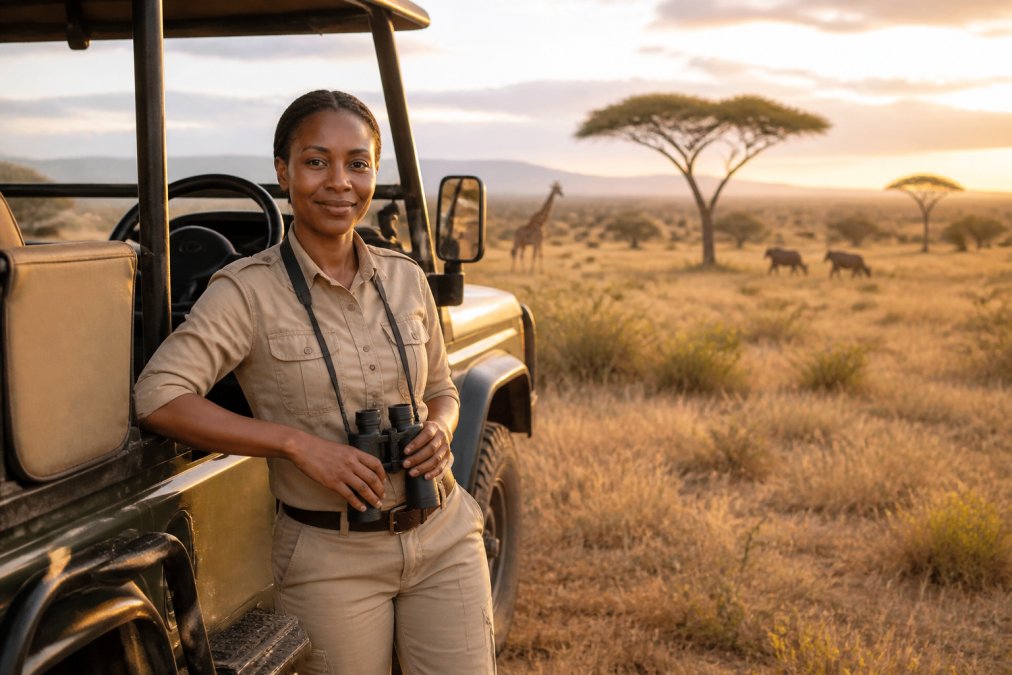
Ask about the operator’s experience with solo female travelers specifically. Some operators have built expertise in this niche and understand unique considerations involved. They’ll have processes for solo traveler check-ins, flexibility around itineraries, and guides trained to be attentive to solo traveler needs.
Female-Led and Female-Friendly Operators
Consider operators led by women or those with demonstrated commitment to female empowerment. Female-led safari companies often bring different perspectives to safety and comfort for solo female travelers. They understand practical concerns like bathroom privacy, lighting in camps, and communication expectations.
Female-friendly operators typically offer flexibility around group compositions. Some solo female travelers prefer joining small groups of other women rather than traveling completely alone. A good operator accommodates both preferences.
Research the operator’s local staff composition. Do they employ female guides, lodge managers, and drivers? This representation matters both for safety and for the quality of your experience.
Private vs Group Safari for Solo Travelers
The choice between a private safari and a group experience fundamentally shapes your solo female traveler journey.
A private safari offers complete control over your itinerary, pace, and social interaction. You move at your speed and have a vehicle and guide entirely to yourself. The trade-off is cost; private safaris are significantly more expensive than group options.
Group safaris provide built-in social connection with other travelers. For some solo female travelers, this removes the psychological weight of traveling alone. Group safaris are also more budget-friendly. The downside is less flexibility and potential personality clashes.
A middle ground exists: small group safaris of 4-6 people. These offer social connection without rigidity and cost less than private safaris while providing more flexibility. Many operators, including Acacia African Safaris, specialize in completely personalized and tailor-made itineraries.
Consider your personality and travel style. If you’re energized by meeting other travelers, a small group safari works well. If you’re introverted or particular about pace and preferences, a private safari justifies the investment.
Tanzania Safari Cost and Budget Planning
Safari pricing depends on multiple variables: season, accommodation quality, vehicle type, guide experience level, and whether the experience is private or group-based.
Budget planning should account for pre-trip expenses (vaccinations, travel insurance, visa fees), the safari itself, and post-safari contingencies. Research typical costs for your desired experience type and build in a 15-20% buffer for unexpected expenses.
When comparing operator quotes, ensure you’re comparing equivalent experiences. Request detailed breakdowns of what’s included: meals, activities, park fees, transfers, and Wi-Fi connectivity.
Consider visiting during shoulder seasons (just before or after peak season) for better value without sacrificing wildlife viewing quality.
Safety in the Field: Lodge, Vehicle, and Bush Protocols
Once you’re on safari, your safety depends on understanding and following established protocols. These are proven practices developed over decades of safari operations.
Tented Camp and Lodge Security
Safari accommodations range from luxury lodges with en-suite bathrooms and electricity to tented camps with basic amenities. Regardless of type, security protocols are similar. Lodges and camps are enclosed by fencing or natural barriers, with staff present 24/7. Gates are locked at night, and movement outside designated areas after dark requires an armed guide.
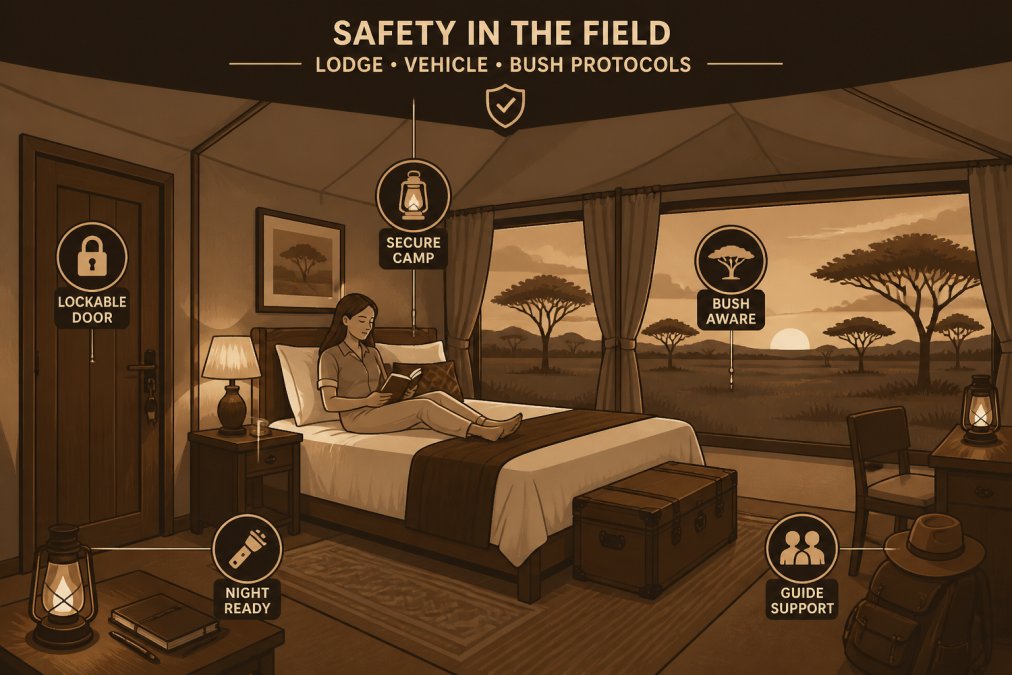
Your accommodation will have a panic button or direct phone line to lodge management. Familiarize yourself with these systems on arrival. Keep your room locked when inside and when you leave. Use the lodge safe for valuables.
Ask about bathroom arrangements when booking. Lighting around bathroom facilities should be adequate; request a torch from lodge staff if needed.
Meals at lodges and camps are communal experiences that build connection with other travelers and staff. Engaging with others creates a support network and enriches your experience.
Wildlife Etiquette and Predator Awareness
Understanding wildlife behavior is essential for safari safety. Large animals like lions, elephants, and buffalo are wild creatures that demand respect. They’re not aggressive toward humans by nature, but they will defend themselves if threatened.
Your guide’s primary job is to keep you safe while providing excellent wildlife viewing. Follow your guide’s instructions without question. These instructions are based on years of experience reading animal behavior.
Game drives follow established routes through protected areas. Vehicles maintain safe distances from wildlife, and guides communicate via radio about animal locations and behavior. Most wildlife encounters are peaceful observation from a distance.
Predator awareness means understanding that lions, leopards, and hyenas are present. This is why you don’t leave your accommodation after dark without a guide and why you don’t wander off designated paths. Follow these protocols and you’ll be perfectly safe.
Nighttime Safety and Emergency Protocols
After sunset, movement outside your accommodation requires an armed guide or staff escort. Many lodges offer night drives or walks conducted by experienced guides with appropriate lighting and communication equipment. These are thrilling, safe experiences that reveal nocturnal wildlife behavior.
Lodges have emergency protocols for medical situations, severe weather, or other crises. Ask staff about these protocols on arrival. Most lodges have radio communication with nearby facilities and can arrange emergency evacuation if necessary.
Acacia African Safaris maintains 24/7 contact support for all travelers, with emergency protocols in place for any situation.
Digital Safety, Connectivity, and Financial Protection
Protecting your digital identity and financial information requires intentional steps. Wi-Fi connectivity at lodges and camps is increasingly reliable, though slower than you’re accustomed to.
Avoid conducting sensitive financial transactions on public Wi-Fi. If you must handle finances online, use a VPN service to encrypt your connection.
Keep your phone charged and with you at all times. Carry a portable battery pack as backup. Your phone is your primary communication device in case of emergency.
Be cautious about sharing your location on social media while traveling. Share photos and updates after you’ve left an area, not while you’re there.
Financial safety means carrying a mix of payment methods: cash in local currency, a credit card, and a backup card in a separate location. Use lodge safes for valuables and excess cash.
Cultural Sensitivity and Local Customs
Respecting local cultures is ethically important and a safety practice. Disrespectful behavior toward local communities can escalate situations.
Learn basic phrases in the local language. Attempting “hello” and “thank you” in Swahili shows respect and builds goodwill. Dress respectfully, particularly in villages or cultural sites. Cover your shoulders and knees. Always ask permission before photographing people.
Treat safari staff, guides, drivers, and lodge workers with the same respect you’d show anyone in a service role. This creates positive working relationships and often results in better experiences.
Tipping is customary in East Africa. Research appropriate amounts for guides, drivers, and lodge staff. Learn about the history and current situation of communities and countries you’re visiting. Many lodges offer cultural experiences that provide authentic engagement beyond wildlife viewing.
Solo female safari travel is a carefully planned, professionally guided experience that thousands of women complete successfully each year. The key is choosing an operator committed to your safety and comfort, preparing thoroughly before departure, and trusting the expertise of your guide and lodge staff once you’re in the field. When you work with a reputable operator like Acacia African Safaris that specializes in personalized itineraries, provides 24/7 contact support, and maintains luxury accommodations with proven safety protocols, you gain both the security and flexibility to experience Africa on your own terms.
| Safety Consideration | Key Action | Why It Matters |
|---|---|---|
| Health preparation | Consult travel medicine specialist 6-8 weeks ahead | Prevents medical emergencies in remote areas |
| Travel insurance | Purchase coverage including medical evacuation | Ensures access to quality care if needed |
| Operator vetting | Request references from solo female travelers | Identifies operators with proven safety track records |
| Accommodation choice | Confirm security features and emergency protocols | Ensures safe lodging in unfamiliar environment |
| Guide relationship | Follow guide instructions without hesitation | Leverages professional expertise in wildlife safety |
| Digital security | Use VPN for financial transactions, protect location sharing | Protects identity and financial information |
| Cultural respect | Learn local customs and language basics | Builds positive relationships with local communities |
Frequently Asked Questions
Is it safe for a solo female to go on a safari in Tanzania?
Yes, thousands of solo female travelers visit Tanzania annually for safaris. Safety depends on choosing a reputable tour operator with strong security protocols, staying in established lodges with trained staff, and following wildlife etiquette. Most solo female travelers report feeling secure when they book with operators who prioritize female-specific safety measures, maintain 24/7 emergency contact support, and provide experienced local guides familiar with both wildlife behavior and traveler safety.
What are the best safari safety tips for women traveling alone?
Key safety tips include: obtain comprehensive travel insurance covering medical evacuation, share your itinerary and emergency contacts with trusted people at home, keep copies of important documents separate from originals, use a satellite phone or reliable communication device in remote areas, dress modestly to respect local customs, avoid traveling alone outside organized excursions, and book private transfers rather than relying on shared transportation. Stay alert to your surroundings, trust your instincts about people and situations, and maintain awareness of wildlife behavior during game drives.
Should I book a private or group safari as a solo female traveler?
Private safaris offer greater control over your pace, itinerary flexibility, and personal attention from your guide and support team, which many solo female travelers prefer for comfort and security. Group safaris provide companionship and shared costs but offer less flexibility. Consider a private safari if budget allows, the personalized service, dedicated vehicle, and customized itinerary reduce stress and enhance safety. Some operators offer small group options (2-4 travelers) that balance cost and privacy. Your choice depends on your comfort level with solo independence and budget.
How much does a Tanzania safari cost, and what affects the price?
Tanzania safari pricing depends on accommodation type (budget tented camps to luxury lodges), safari duration (3-7 days typical), season (peak vs. shoulder), vehicle type (shared vs. private), and operator credentials. Luxury private safaris with 5-star lodges cost significantly more than group tours with budget accommodation. Pricing also reflects guide expertise, park fees, meals, transfers, and emergency support infrastructure. Request a detailed quote from your chosen operator to understand what’s included and compare value rather than price alone. Premium operators often justify higher costs through exclusive properties, experienced guides, and comprehensive support.


