Table of Contents
- Why Educational Wildlife Adventures Matter for Family Learning
- Top Family Wildlife Vacation Destinations Across East Africa
- How to Plan a Wildlife Safari With Kids: A Practical Framework
- Educational Animal Encounters for Kids That Build Conservation Awareness
- Ethical Wildlife Tourism for Families: Balancing Adventure With Responsibility
- Budget-Friendly Local Alternatives to International Wildlife Travel
- Seasonal Planning Guide for Peak Wildlife Viewing With Family
- Making Your Wildlife Adventure Accessible and Inclusive for All
Written by Saad Syed – Last Updated: August 9, 2026
Why Educational Wildlife Adventures Matter for Family Learning
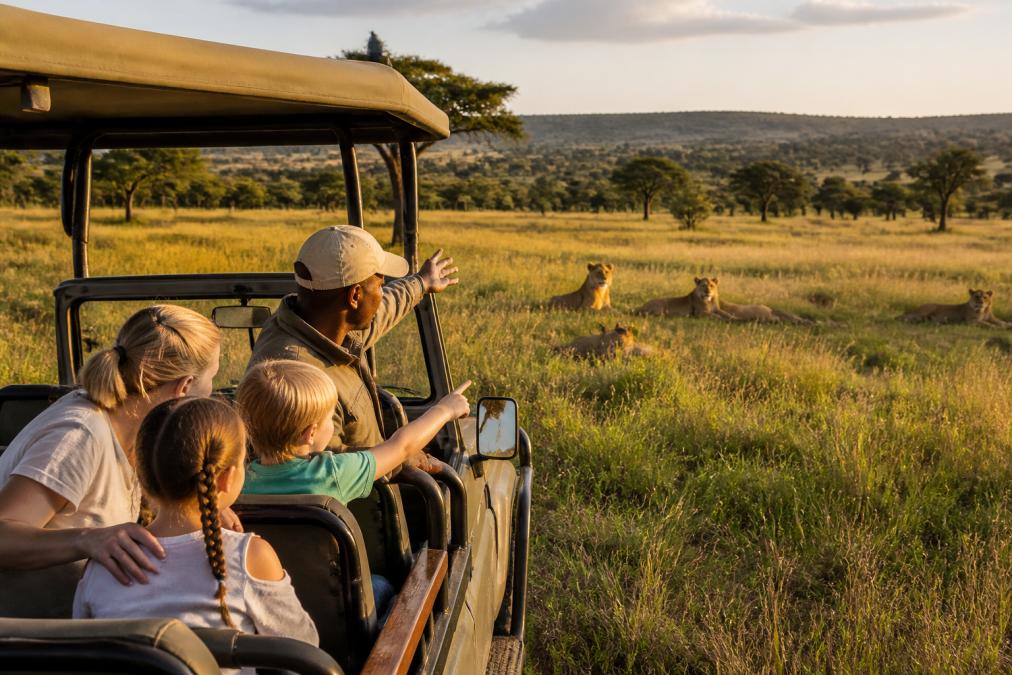
Educational wildlife adventures for families transform how children understand nature. Direct engagement with wildlife in natural habitats develops conservation awareness, ecological literacy, and lasting connections to the natural world that classroom instruction alone rarely achieves. A child who watches lions interact or observes predator-prey dynamics firsthand develops fundamentally different understanding than one reading textbooks.
At Acacia African Safaris, families return home with shifted priorities. Parents report teenagers asking deeper questions about environmental policy. Children maintain wildlife interest months after trips end. When families understand how ecosystems function, they become advocates, making different consumer choices and supporting conservation initiatives. Educational wildlife adventures build the next generation of environmental stewards.
Wildlife immersion transforms how families understand nature, moving from abstract knowledge to embodied understanding that shapes lifelong choices and values.
Top Family Wildlife Vacation Destinations Across East Africa
East Africa remains the gold standard for family wildlife experiences, offering unparalleled biodiversity, accessible infrastructure, and deeply rooted conservation ecosystems. The region’s national parks provide educational wildlife adventures balancing thrilling encounters with genuine learning.
Tanzania’s National Parks and Wildlife Sanctuaries
Tanzania hosts iconic wildlife destinations offering distinct educational value. The Serengeti National Park delivers the Great Migration spectacle, while the Ngorongoro Conservation Area presents a self-contained ecosystem where families observe multiple species within a single crater landscape.
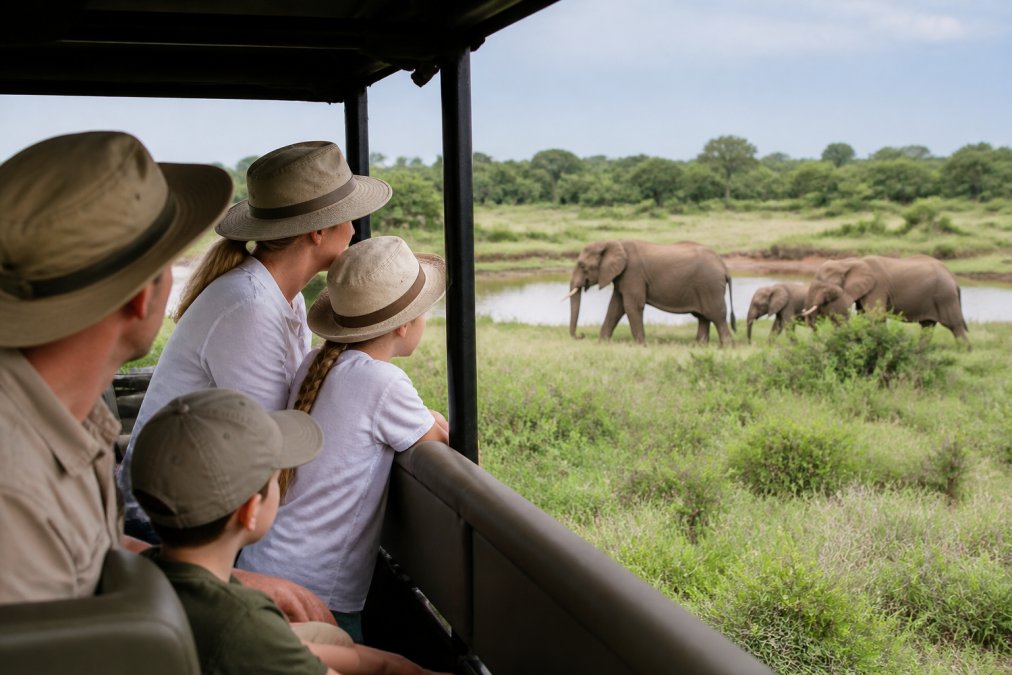
Tarangire National Park offers exceptional value for families seeking fewer crowds and intimate encounters. The park’s massive elephant herds and over 500 bird species make it ideal for species identification and naturalist programs. Unlike busier parks, Tarangire allows guides extended time with animal groups, addressing the common frustration families feel about rushed traditional safaris.
Tanzania’s protected areas integrate cultural immersion effectively. Maasai communities surrounding these parks offer authentic encounters contextualizing wildlife conservation within human communities, helping families understand how local populations depend on and protect these ecosystems.
Kenya’s Birdwatching and Conservation Centers
Kenya’s reputation for birdwatching excellence makes it exceptional for families interested in species identification and citizen science. The country hosts over 1,000 bird species, with several sanctuaries offering structured programs for young naturalists.
Amboseli National Park provides dramatic backdrops with Mount Kilimanjaro framing the landscape while delivering reliable elephant sightings and diverse bird populations. For families with teenagers, Amboseli’s proximity to research stations means access to conservation scientists explaining ongoing field work and ecological research methods.
The Samburu National Reserve offers alternative educational wildlife adventures for families seeking less-traveled routes, with unique species like the Somali ostrich and reticulated giraffe requiring guides with specialized knowledge.
How to Plan a Wildlife Safari With Kids: A Practical Framework
Planning successful educational wildlife adventures requires balancing child ages, physical fitness levels, budget, and learning objectives. A framework approach prevents common pitfalls like overscheduled itineraries or mismatched accommodations.
Choosing the Right Timing and Duration
Safari timing dramatically affects wildlife viewing and family experience. The dry season (June-October in Tanzania, July-September in Kenya) concentrates animals around water sources, increasing sighting probability. However, shoulder seasons (April-May, November) offer superior value with fewer crowds, more personalized guide attention, and comparable viewing conditions.
Duration matters equally. A five-day safari allows families to acclimate to wildlife observation rhythms without exhaustion. Three-day trips feel rushed for families with younger children; two weeks permits deeper ecosystem engagement and cultural experiences.
Young children (under 8) manage 4-5 hours daily in vehicles comfortably; teenagers tolerate 6-8 hours. Vehicle suspension, guide commentary quality, and accommodation comfort directly impact family satisfaction. Acacia African Safaris’ flexible itineraries address this reality, adjusting routes based on how families actually feel rather than predetermined schedules.
:::pro
Build in rest days. Families often book back-to-back game drives assuming more viewing equals better value. In reality, children retain more from fewer, higher-quality observations than from exhaustion-driven marathons.
:::
Preparing Children for Immersive Wildlife Experiences
Preparation separates transformative experiences from forgettable trips. Children arriving with baseline wildlife knowledge, understanding predator-prey relationships and species identification basics, engage more deeply with observations.
Pre-trip activities build anticipation and learning foundation. Using resources like eBird or edZOOcation subscription boxes, families explore species they’ll encounter. A child who studied lion social structure before the trip recognizes pride hierarchy during morning game drives and asks informed questions.
Practical preparation matters too. Discuss vehicle dynamics, explain why guides request silence during certain moments, and establish realistic expectations about wildlife behavior. Animals don’t perform on schedule.
Educational Animal Encounters for Kids That Build Conservation Awareness
Genuine conservation awareness emerges from direct animal encounters combined with ecological context. Structured educational programs transform encounters into conservation education.
Guided Wildlife Spotting and Species Identification
Guided wildlife spotting with trained naturalists converts observation into education. Expert guides explain predator-prey dynamics in real time, identify behavioral cues, and contextualize observations within broader ecological systems.
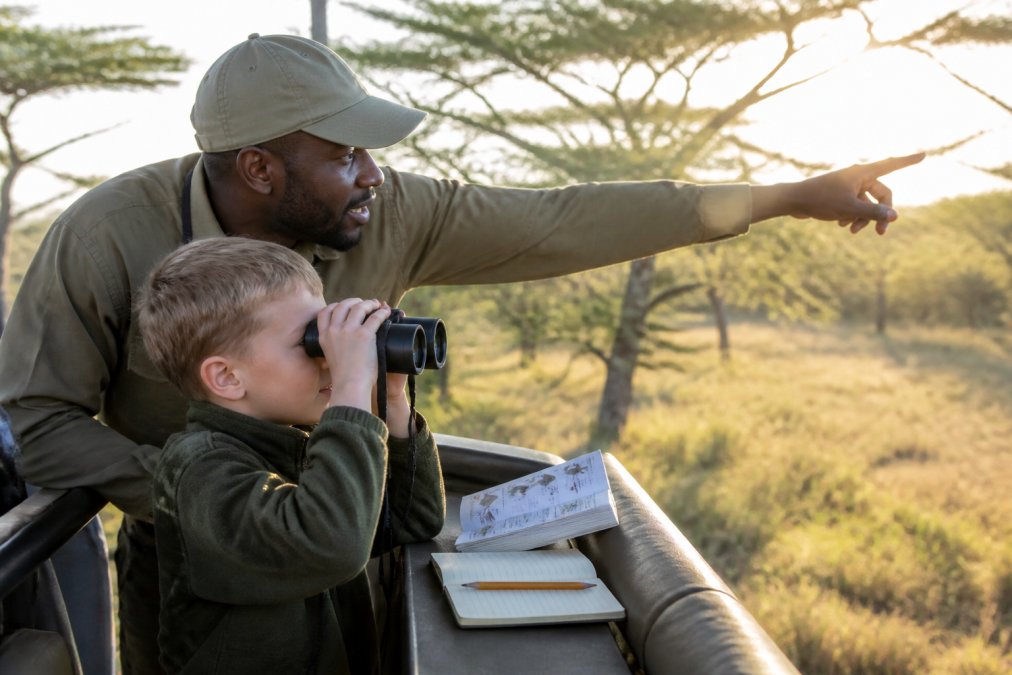
Species identification develops multiple competencies simultaneously. Children learn systematic observation, noticing plumage patterns and behavioral distinctions. A teenager who correctly identifies 15 bird species during a morning drive has internalized ecological knowledge far more effectively than memorizing a field guide.
The best guides transform this into conservation narrative, explaining habitat loss, species threats, and restoration efforts while connecting observations to real conservation work across protected areas.
Interactive Naturalist Programs and Field Trips
Many East African sanctuaries offer structured educational programs beyond standard game drives. These programs embed learning objectives into adventure structure.
Interactive naturalist programs might include tracking exercises teaching families to read animal signs, night safaris revealing nocturnal species, walking safaris providing ground-level perspective, or conservation project participation where families contribute to actual research. A teenager contributing bird observations to eBird’s global database understands they’re part of scientific research.
Ethical Wildlife Tourism for Families: Balancing Adventure With Responsibility
Families intending to support conservation can inadvertently fund practices harming animals or ecosystems. Intentional choices about how and where families engage with wildlife directly impact conservation outcomes.
Supporting Protected Areas and Local Conservation Efforts
Not all safari operators equally support conservation. Responsible operators structure business models to fund protected area management, employ local guides and staff, and partner with conservation organizations.
When families choose operators committed to conservation partnerships, tourism dollars directly support habitat protection, anti-poaching efforts, habitat restoration, and community conservation programs. Families should ask specific questions: Does the operator employ local guides? Do they partner with conservation organizations? Can they document where tourism revenue flows?
Sustainable Travel Practices That Minimize Environmental Impact
Individual family choices compound into measurable ecosystem impact. Sustainable practices include minimizing vehicle impact through designated routes, respecting wildlife distance guidelines, reducing waste through refillable containers, supporting local communities through locally-made purchases, and following guide instructions regarding photography.
Some safari operators encourage practices harming wildlife, getting extremely close for photos or pursuing animals for extended periods. Families should recognize these red flags and choose operators prioritizing animal welfare.
Budget-Friendly Local Alternatives to International Wildlife Travel
International safaris represent significant investments. Accessible educational wildlife adventures exist at multiple price points. Many families underestimate opportunities within their own countries or regions. National parks, wildlife sanctuaries, and nature reserves offer educational animal encounters comparable in learning value to expensive international trips.
Citizen science programs like eBird cost nothing while delivering genuine conservation contribution and species identification education. The National Wildlife Federation’s Certified Wildlife Habitat program enables families to create backyard ecosystems supporting local wildlife. Audubon Adventures provides curriculum-aligned materials for home learning.
Conservation awareness and ecological education don’t require expensive international travel. Committed families can build sophisticated understanding through local engagement before investing in international experiences.
Seasonal Planning Guide for Peak Wildlife Viewing With Family
Wildlife viewing success depends heavily on seasonal timing. The dry season (June-October in Tanzania, July-September in Kenya) concentrates animals around water sources, maximizing sighting probability, though heat and crowds intensify.
The wet season (November-May) transforms landscapes into lush ecosystems with migratory birds returning and breeding seasons peaking. Fewer vehicles mean more intimate encounters, though road conditions deteriorate.
Shoulder seasons (April-May, November) offer optimal balance with reliable wildlife viewing without peak crowds, moderate temperatures, and reduced costs. Seasonal planning also considers specific learning objectives, families interested in bird identification might target migratory seasons, while families seeking predator-prey observation benefit from dry season concentrations.
Making Your Wildlife Adventure Accessible and Inclusive for All
Educational wildlife adventures should welcome participants across ability spectrums. Accessibility considerations often receive minimal attention, yet thoughtful planning enables families with mobility challenges, sensory differences, or other access needs to participate fully.
Physical accessibility requires honest assessment. Not all safari vehicles accommodate wheelchairs, and guides trained in accessibility needs remain rare. Families with mobility considerations must specifically request accessible options.
Sensory accessibility deserves equal attention. Families with deaf or hard-of-hearing members need guides equipped with visual interpretation. Families with blind or low-vision members benefit from guides trained in detailed verbal description. Neurodivergent children might need quieter vehicles or flexible schedules.
Acacia African Safaris’ commitment to personalized itineraries extends to accessibility customization. Flexible routes, adjustable pacing, and willingness to modify standard experiences accommodate diverse family needs.
Contact operators well in advance about accessibility needs. Operators committed to inclusion welcome specific requests and adjust experiences accordingly.
Educational wildlife adventures for families represent profound opportunities for learning and conservation engagement extending far beyond the trip itself. When families intentionally choose operators like Acacia African Safaris that prioritize personalized learning experiences, seamless logistics, and conservation partnerships, they invest in their children’s environmental literacy and values. The combination of expert naturalist guidance and flexible itineraries ensures families can pursue specific learning goals while enjoying elevated comfort. Request information today about designing an educational wildlife adventure shaped around your family’s unique pace, interests, and conservation aspirations.
| Consideration | Implementation | Impact |
|---|---|---|
| Pre-trip preparation | Study species identification, use eBird resources | Children engage more deeply with observations |
| Timing selection | Choose shoulder seasons for balance | Fewer crowds, better guide attention, moderate costs |
| Guide expertise | Request naturalist-trained guides | Learning transforms from passive viewing to active discovery |
| Accessibility planning | Communicate needs in advance | Ensures inclusive experiences for all family members |
| Conservation support | Choose operators funding protected areas | Tourism spending directly supports ecosystem protection |
Frequently Asked Questions
What are the best wildlife destinations for families with young children?
East African destinations like Tanzania’s Serengeti and Kenya’s protected reserves offer family-friendly wildlife experiences with excellent infrastructure. Choose destinations with established safari operators experienced in family travel, shorter game drives suited to children’s attention spans, and accommodations with family amenities. Consider visiting during the dry season (June-October) when wildlife is more concentrated and viewing conditions are optimal. Acacia African Safaris specializes in tailoring these experiences to your family’s pace and interests.
How can I make wildlife travel more educational for my kids?
Combine direct wildlife viewing with guided naturalist programs that teach species identification, animal behavior, and ecosystem dynamics. Engage children before travel through bird identification apps like eBird and educational resources. During your safari, request guides experienced in teaching children, schedule interactive activities like tracking exercises, and encourage journaling or photography. Acacia African Safaris curates educational components within personalized itineraries, ensuring learning complements adventure.
What are some ethical wildlife tourism practices for families?
Choose operators committed to conservation, support protected areas through entrance fees, maintain respectful distances from animals, and avoid attractions involving animal captivity or exploitation. Select accommodations that practice environmental stewardship and employ local staff. Teach children about biodiversity and habitat protection during your trip. Ethical wildlife tourism for families strengthens conservation awareness while minimizing environmental impact on the ecosystems your family explores.
How do I choose a kid-friendly wildlife adventure tour?
Evaluate tour operators based on their experience with families, flexibility to adjust itineraries, guide expertise in working with children, and accommodation standards. Request references from families with similar-aged children. Ensure the operator offers personalized planning rather than fixed group itineraries, as this allows pacing suited to your family’s needs. Acacia African Safaris provides completely tailor-made experiences with 24/7 support, allowing you to customize every element around your family’s learning goals and comfort.
This article was written using GrandRanker


