Table of Contents
- Why Luxury Safari Standards Are Harder to Verify Than You Think
- What to Look for in a Luxury Safari Operator
- Safari Guide Qualifications: What Separates Good from Exceptional
- Luxury Safari Cost Breakdown: What the Daily Rate Actually Covers
- A Practical Framework for Vetting Luxury Safari Standards
- Post-Safari Feedback Loops and What They Reveal About an Operator
- Conclusion
Last Updated: August 6, 2026
Why Luxury Safari Standards Are Harder to Verify Than You Think
Luxury safari standards are not regulated by a single governing body, meaning any operator can use the word “luxury” without meeting a defined benchmark. Marketing language has outpaced accountability in the safari industry, and discerning travelers are paying the price.
The word “luxury” appears on everything from a basic tented camp with a flush toilet to a genuinely world-class wilderness property with a personal butler, private plunge pool, and a field guide with decades of tracking experience. Yet from a brochure or website, they can look identical. Many travelers only discover the shortfall after arriving, when the opportunity to choose differently has passed.
The biggest mistake travelers make is equating high price with high standards. Price is a signal, not a guarantee. An operator charging a premium daily rate may still cut corners on guide expertise, vehicle exclusivity, or conservation accountability. Always verify the specifics.
What to Look for in a Luxury Safari Operator
The clearest marker of a genuine luxury safari operator is the specificity of their answers when you ask hard questions. A credible operator will tell you exactly which private game concession you will access, the name and qualifications of your field guide, and precisely what is included in your daily rate.
Private Game Concessions vs. Public National Parks
A private game concession is a designated wilderness area leased exclusively by a lodge or operator, typically adjacent to or within a national park. Public national parks are open to all licensed vehicles and operators simultaneously.
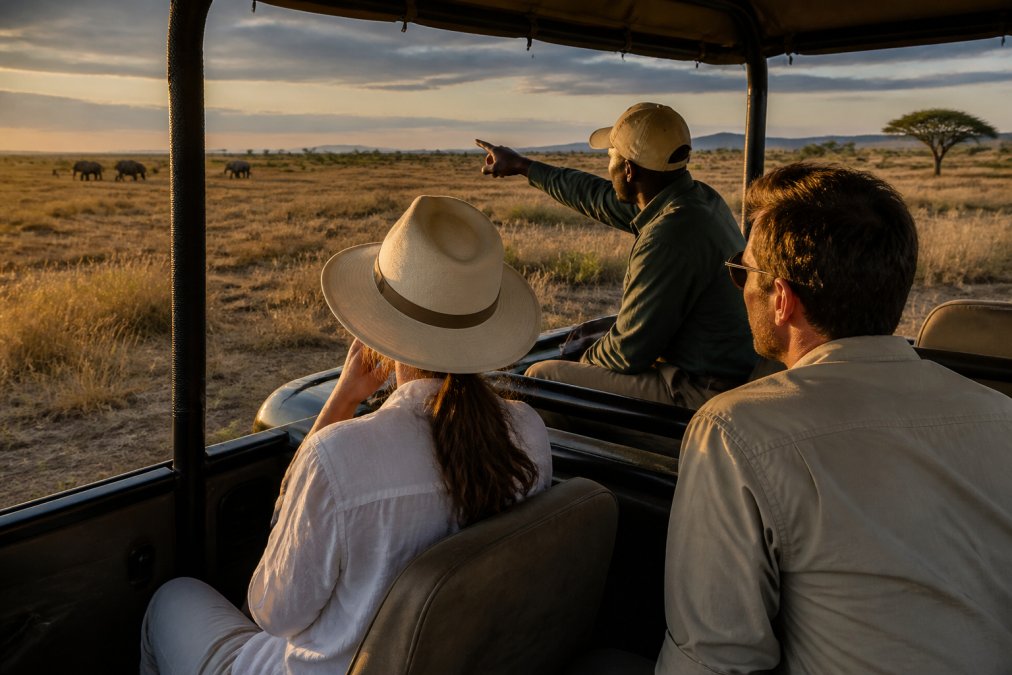
In a public park, you may share a lion sighting with a dozen other vehicles. On a private concession, your exclusive-use vehicle is often the only one present. Off-road tracking is typically permitted on private land, allowing your field guide to follow an animal’s trail directly rather than staying on designated roads. For genuine privacy and wildlife immersion, insist on a private game concession and ask: “Is the property on a private concession, and is off-road driving permitted?”
Exclusive-Use Vehicles and Guest-to-Wilderness Ratios
Most high-end operators cap their game drive vehicles at six guests; some limit this to four. When a vehicle carries eight or more guests, positioning around a sighting becomes difficult and the intimacy that defines a bespoke experience disappears. Ask specifically: “How many guests share a vehicle, and is private vehicle hire available?”
Itinerary Customization and Flexibility
A genuine luxury safari is a completely personalized itinerary built around your interests, pace, and travel dates. This means the route, activities, and lodge selection are shaped by you, not by a standard template. Legitimate customization includes the ability to adjust routes mid-trip, add optional excursions such as night safaris or bush dining, and choose accommodation that matches your comfort preferences.
Safari Guide Qualifications: What Separates Good from Exceptional
Safari guide qualifications are one of the most underexamined and consequential aspects of luxury safari planning.
The best field guides hold formal certifications from recognized professional bodies. In Tanzania, the Tanzania Tourist Board oversees guide licensing, and reputable operators employ guides who hold advanced professional ratings. The difference between a licensed guide and an exceptional one comes down to experience, ecological knowledge, and the ability to read animal behavior in real time.
Ask any operator: “What formal qualifications does our guide hold, and how many years have they worked in this specific ecosystem?” A guide who has spent a decade in the Serengeti understands seasonal migration patterns, territorial boundaries of specific prides, and subtle behavioral cues that signal movement. The best guides function as naturalists, trackers, and educators simultaneously.
According to Tanzania Tourist Board licensing standards, all professional safari guides operating in Tanzania are required to hold a valid government-issued guide license.
Ask the operator to send you a short biography of your assigned field guide before departure. A guide proud of their qualifications will have this information readily available.
Luxury Safari Cost Breakdown: What the Daily Rate Actually Covers
Understanding luxury safari standards requires understanding what you are actually paying for. For current pricing, contact Acacia African Safaris directly for a tailored quote based on your specific dates and requirements.
What matters more than the daily rate is what that rate includes. A well-structured all-inclusive package should cover accommodation, all meals, game drives, park fees, and a conservation levy.
Hidden Costs Beyond the Quoted Price
The most common hidden costs include:
- Conservation levies and concession fees: Some operators exclude these from the quoted rate.
- Premium activities: Night safaris, hot air balloon flights, bush dining, and guided walking safaris are sometimes charged separately.
- Flights and transfers: Fly-in safari legs between camps are frequently excluded from lodge rates.
- Gratuities: Tipping culture in East African safaris is well-established but never included in lodge rates.
- Travel insurance and medical evacuation coverage: This must be arranged independently.
Always request a full itemized breakdown before signing any booking agreement.
All-Inclusive Packages vs. Itemised Pricing
All-inclusive packages offer predictability and are standard among genuinely high-end operators. Itemized pricing, where each activity or meal is charged separately, introduces uncertainty and can create a transactional atmosphere that undermines the immersive experience.
| Cost Element | Typically Included | Often Excluded |
|---|---|---|
| Accommodation | Yes | – |
| All meals | At luxury level | At mid-range |
| Game drives | Yes | Night drives sometimes extra |
| Park and concession fees | Should be included | Often itemized separately |
| Light aircraft transfers | No | Usually quoted separately |
| Premium activities | Varies | Bush dining, balloon safari |
| Gratuities | No | Always separate |
| Travel insurance | No | Always separate |
A Practical Framework for Vetting Luxury Safari Standards
Vetting luxury safari operators requires asking the right questions in the right sequence.

Accommodation and Lodge Amenities Checklist
Use this checklist when evaluating any property:
- Is the property on a private game concession or adjacent to one?
- Does the suite or tent have a private veranda or outdoor space?
- Is the lodge fully staffed with a personal butler or dedicated host?
- Are lodge amenities (Wi-Fi, laundry, minibar) included or charged separately?
- What is the maximum number of guests the lodge accommodates at one time?
- Are sundowners and bush dining offered as standard?
- What is the lodge’s policy on children?
- Can you review recent, verified guest feedback from an independent source?
Luxury accommodation is not simply about thread count or plunge pools. The guest-to-staff ratio, cuisine quality, and thoughtfulness of the physical environment all contribute to whether a property genuinely delivers on its positioning.
Accessibility, Medical Evacuation, and Safety Protocols
Remote wilderness access comes with genuine logistical complexity. Many high-end lodges are accessible only by light aircraft and hours from the nearest hospital. Before booking, confirm:
- Is a medical evacuation plan in place, and which service provider does the operator use?
- What is the nearest facility capable of handling a serious medical emergency?
- Does the operator work with a licensed medical evacuation company operating in Tanzania?
- Is the airstrip operational year-round, or does the wet season affect access?
According to Flying Doctors Society of Africa emergency aviation services, medical evacuation coverage is essential for travelers visiting remote safari destinations in East Africa. Travel insurance that includes emergency medical evacuation is not optional. Verify that your policy covers air ambulance evacuation from remote locations.
Sustainability, Conservation Levies, and Ethical Standards
Genuine luxury safari operators are invested in the long-term health of the ecosystems they operate within. A degraded wilderness produces fewer wildlife sightings and reduced biodiversity. Conservation and commercial quality are aligned.
Ask any operator:
- Does the property pay a conservation levy, and where does that money go?
- Is the operator affiliated with any recognized conservation body or community partnership?
- What percentage of staff are drawn from local communities?
- Does the lodge operate any anti-poaching or habitat restoration programs?
Operators who cannot answer these questions clearly are either not prioritizing sustainability or are not transparent about their practices.
A conservation levy is a fee charged per guest per night that funds wildlife protection, habitat management, and community development programs in and around the reserve. It should appear as a named line item in any all-inclusive package.
Post-Safari Feedback Loops and What They Reveal About an Operator
How an operator handles post-trip feedback is one of the clearest indicators of their long-term commitment to quality. Operators who actively solicit detailed feedback, respond personally, and demonstrate that it influences future itineraries are operating at a fundamentally different standard.
Before booking, ask: “Can you share examples of how guest feedback has shaped changes to your itineraries or lodge partnerships?” Look for patterns in verified third-party reviews on platforms such as Tripadvisor safari operator reviews. Examine how the operator responds to critical reviews. Do they acknowledge concerns and explain what changed, or do they deflect?
Operators who offer flexible route adjustments mid-trip and check in proactively during the journey are demonstrating the same responsiveness that good post-safari feedback loops reflect. According to East Africa Tourism Platform industry standards, operators who maintain structured guest feedback programs consistently achieve higher repeat booking rates and stronger word-of-mouth referrals.
Verifying luxury safari standards before you book takes more effort than browsing a brochure, but the process outlined here makes it systematic. Acacia African Safaris builds completely personalized itineraries with full transparency on accommodation, guide qualifications, and what every all-inclusive package covers, backed by 24/7 support from the moment your airport transfer begins. Request information from Acacia African Safaris and start the conversation with the framework above in hand.
Frequently Asked Questions
What defines a true luxury safari experience?
A genuine luxury safari combines private game concessions with exclusive-use vehicles, low guest-to-guide ratios, and bespoke itinerary customization. High-end lodges offer personal butlers, bush dining, sundowners in the wilderness, and amenities comparable to a five-star hotel. The difference from a mid-range safari is not just comfort; it is the level of access, privacy, and personalized attention at every stage, from seamless airport transfers through to curated wildlife sightings and flexible daily scheduling built around your interests.
How much does a luxury African safari cost?
Luxury safari pricing varies significantly based on destination, season, lodge tier, and the length of your itinerary. Costs typically include accommodation, all meals, game drives, and conservation levies, but fly-in safari transfers, visa requirements, travel insurance, and medical evacuation cover are often separate. Because bespoke experiences are priced individually, the most accurate approach is to request a detailed quote from your operator that itemises every component, so you can compare like for like rather than headline daily rates.
What qualifications do you need to be a safari guide?
In Tanzania, professional safari guides are certified through the Tanzania Tourist Board and the College of African Wildlife Management at Mweka. Qualified field guides hold certificates covering wildlife identification, off-road tracking, first aid, and guest safety protocols. The highest-calibre guides add years of field experience on top of formal qualifications. When vetting an operator, ask specifically for the guide’s certification level, years in the field, and whether they hold current first-aid credentials, as these details separate a knowledgeable guide from an exceptional one.
Are luxury safaris worth the premium price tag?
For travelers who value privacy, flexibility, and depth of experience, the premium is well justified. Private game concessions give access to wilderness areas closed to public park traffic, which means fewer vehicles at sightings and the ability to go off-road. Bespoke itineraries mean time spent exactly as you choose, whether that is an extended stay watching a lion pride or a cultural visit to a local community. The all-inclusive structure also removes daily decision fatigue, which is a significant part of what luxury safari guests are paying for.


