Table of Contents
- Safari Cost vs Value: Why the Price Tag Rarely Tells the Full Story
- Safari Price Per Day by Travel Style: Budget, Mid-Range, and Luxury
- What Is Included in Safari Packages: A Line-by-Line Breakdown
- Hidden Expenses That Change Your Safari Cost Calculation
- Budget vs Luxury Safari Comparison: Value-Per-Experience Analysis
- Factors That Influence Pricing: Season, Group Size, and Itinerary Duration
- How a Bespoke, All-Inclusive Safari Package Changes the Value Equation
- Conclusion: Matching Your Safari Cost to the Experience You Actually Want
Written By Saad Syed – Last Updated: August 4, 2026
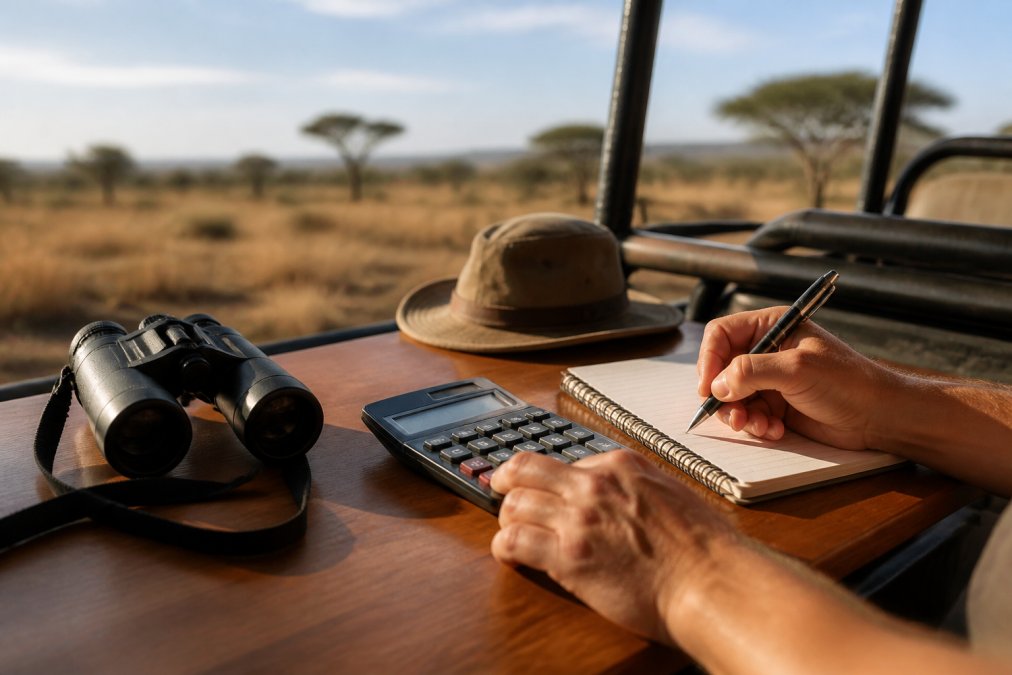
Few purchases in travel generate more anxiety than a safari. The safari cost vs value breakdown is genuinely complex: two itineraries can carry very different price tags for reasons that are not obvious until you understand what each line item actually buys. This guide from Acacia African Safaris cuts through that complexity, walking you through every layer of safari pricing, from the per person per day rate to the hidden expenses most operators never mention upfront. By the end, you will know exactly what you are paying for and whether the premium is worth it for your specific travel style.
A budget camping safari at a lower nightly rate can end up costing more than a mid-range lodge safari once you add park entrance fees, transfers, and tips. The total cost of ownership is what matters, not the brochure price.
Safari Cost vs Value: Why the Price Tag Rarely Tells the Full Story
Safari pricing reflects a layered set of decisions: accommodation standard, vehicle exclusivity, park access, guide expertise, and operational infrastructure. Two safaris visiting the same national park can deliver wildly different wildlife viewing experiences depending on guide knowledge, vehicle quality, and whether you have a private vehicle or share with strangers.
According to Tanzania National Parks Authority official visitor information, Tanzania’s national park system covers some of the most biodiverse ecosystems on the planet, and access to exclusive concession areas requires specific permits priced accordingly. You are not just paying for nights in a camp. You are paying for access, expertise, and the operational reliability that ensures nothing goes wrong when you are hours from the nearest city.
Safari Price Per Day by Travel Style: Budget, Mid-Range, and Luxury
Safari price per day varies significantly across three broad travel styles.
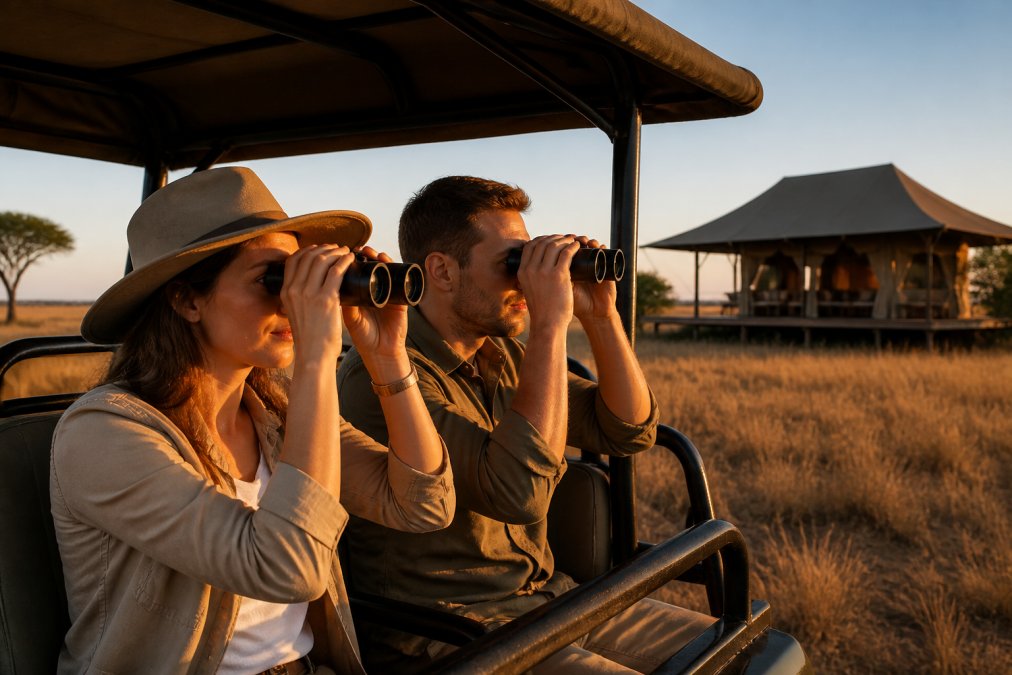
Budget Camping Safari: What Per Person Per Day Actually Covers
A budget camping safari is the most affordable entry point into East African wildlife viewing. Accommodation is typically a basic tent on a fixed campsite within or near a national park. Meals are prepared communally, game drives use shared group tour vehicles, and the experience is functional rather than indulgent.
What per person per day covers includes the tent, full-board meals, a shared vehicle with other travellers, and usually one or two park entrance fees per day. What it does not cover are extras: tipping, optional excursions, bush flights between parks, and conservation levies in certain concession areas. The honest limitation is that shared group tour dynamics can feel rushed if other passengers want to move on from a sighting.
Mid-Range Lodge Safari: The Sweet Spot for Most Travelers
Mid-range lodge safaris represent the point where comfort and value intersect cleanly. Accommodation typically means a permanent tented camp or small lodge with en-suite facilities and a proper bed. Game drives are often in smaller vehicles, and some operators offer semi-private or fully private vehicle options for an additional fee.
For most travellers doing their first or second safari, mid-range is where the experience starts to feel genuinely special. This tier also includes more logistical support: better-coordinated transfers, more reliable communication, and guides with stronger formal training.
Luxury Fly-In Safari: Full-Board, Private Vehicles, and Concession Access
Luxury fly-in safaris operate on a fundamentally different model. Bush flights between camps eliminate long road transfers, private vehicles mean your guide answers only to you, and concession access places you in areas where vehicle density is strictly controlled.
Full-board at this tier means all meals, all drinks including alcohol, and often all activities are included. The value proposition is not just comfort. It is access. Exclusive concessions offer wildlife density and guide freedom that cannot be replicated in shared-access parks.
When comparing luxury operators, ask specifically whether the quoted rate includes concession fees and conservation levies. These can add meaningfully per person per night and are sometimes listed as supplements rather than inclusions.
What Is Included in Safari Packages: A Line-by-Line Breakdown
What is included in safari packages varies more than most travellers realise. An all-inclusive label does not mean the same thing across operators.
| Package Element | Budget Camping | Mid-Range Lodge | Luxury Fly-In |
|---|---|---|---|
| Accommodation | Basic tent, shared facilities | En-suite lodge or tented camp | Exclusive camp, private suite |
| Meals | Full-board, communal | Full-board | Full-board, all drinks included |
| Game drives | Shared group vehicle | Shared or semi-private | Private vehicle |
| Park entrance fees | Usually included | Usually included | Included |
| Bush flights | Not included | Sometimes included | Usually included |
| Conservation levies | Varies | Varies | Included |
| Tipping | Not included | Not included | Not included |
| Travel insurance | Never included | Never included | Never included |
Park Entrance Fees, Conservation Levies, and Concession Fees
Park entrance fees are non-negotiable costs set by the Tanzania National Parks Authority and the Ngorongoro Conservation Area Authority. Conservation levies are separate charges applied in specific protected areas to fund wildlife management and anti-poaching operations.
Concession fees are charges paid by operators for the right to conduct activities within a private concession or conservancy. They are typically much higher than standard park entrance fees and are passed directly to the client, sometimes as a visible line item and sometimes absorbed into the overall rate. If your itinerary includes private conservancy access, ask explicitly how concession fees are handled.
Game Drives, Bush Flights, and Transfers and Logistics
Game drives are the core activity of any safari and are almost always included. What varies is the vehicle configuration: shared group tour vehicles carry more passengers and follow a fixed schedule, while private vehicles operate entirely on your timeline.
Bush flights are the premium alternative to road transfers between parks. A flight from the Serengeti to the Ngorongoro Crater that would take four or more hours by road takes under an hour by light aircraft. At the luxury tier, bush flights are typically included. At mid-range, they are often optional supplements. At the budget tier, they are rarely included.
Transfers and logistics, including airport pickups and inter-camp road transfers, are usually included but worth confirming.
Hidden Expenses That Change Your Safari Cost Calculation
Several categories of expense are almost never included in a standard package, and together they can add meaningfully to your total outlay.
Tipping Guidelines: How Much to Budget and Who to Tip
Tipping etiquette in Tanzania follows a clear hierarchy. The main recipients are your safari guide, camp staff, and any specialist activity guides for experiences like walking safaris or cultural visits.
According to Tanzania Tourism Board official travel guidance, tipping is a significant part of the income structure for safari industry workers. Set aside a tipping budget before you travel, keep it in small denominations of local currency and US dollars, and distribute it at the end of each camp stay rather than at the end of the entire trip.
Forgetting to budget for tips is one of the most common mistakes first-time safari travellers make. It is not optional in practice, and an underprepared traveller can find themselves short of cash in a location where ATMs do not exist.
Travel Insurance and Medical Evacuation Costs
Travel insurance is never included in a safari package, and on a safari, it is not optional. The specific coverage you need in Tanzania goes beyond standard travel insurance: medical evacuation coverage is essential because many camps are located hours from the nearest hospital with surgical capability.
Medical evacuation by light aircraft from a remote camp is expensive without coverage. As noted by AMREF Flying Doctors membership and coverage information, the Flying Doctors Society of Africa operates the primary air evacuation service across East Africa and covers most of Tanzania’s major national parks and remote concession areas. Factor travel insurance and medical evacuation coverage into your total safari cost from the start.
International Flights and Destination Accessibility
International flights to Tanzania typically route through Kilimanjaro International Airport or Julius Nyerere International Airport in Dar es Salaam. Flight costs vary considerably by origin, travel class, and booking lead time. Treat your international flights as a fixed cost to be researched separately, then build your safari budget on top of it.
Budget vs Luxury Safari Comparison: Value-Per-Experience Analysis
The safari cost vs value breakdown ultimately comes down to a value-per-experience question.
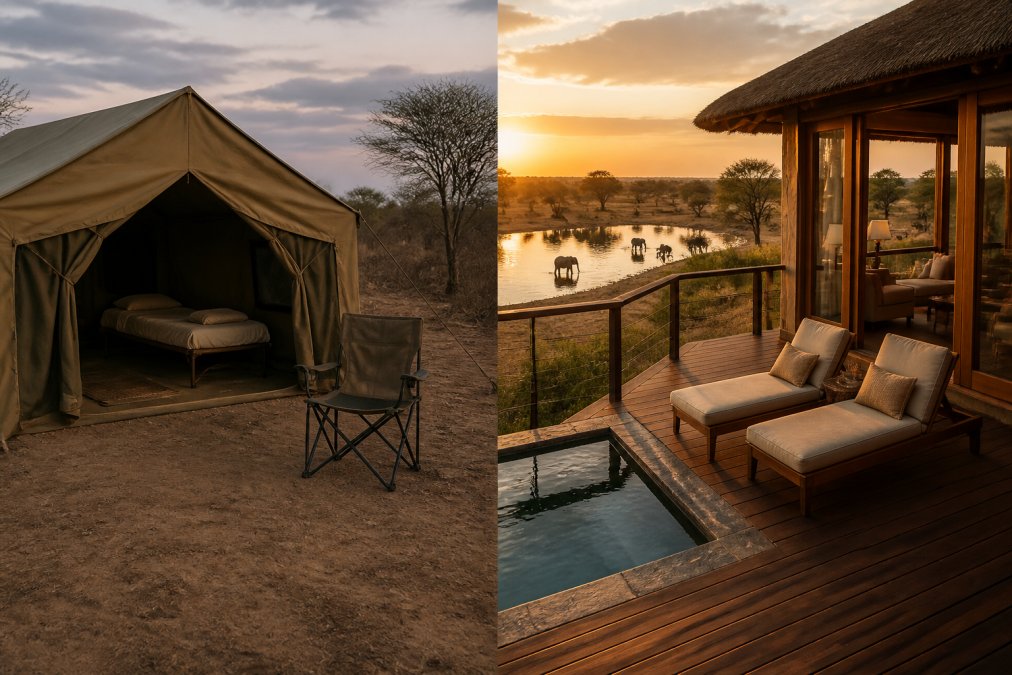
For a traveller whose primary goal is seeing the Great Migration and who is comfortable with communal facilities and shared game drives, a well-run budget camping safari delivers the core wildlife experience at a fraction of the luxury price. For a traveller celebrating a milestone anniversary, traveling solo as a woman who values the security of a known and trusted team, or bringing teenagers who need an engaged and knowledgeable guide, the value equation shifts decisively toward the mid-range and luxury tiers.
| Criteria | Budget Camping | Mid-Range Lodge | Luxury Fly-In |
|---|---|---|---|
| Wildlife access | Shared park areas | Shared park plus some concessions | Exclusive concessions |
| Guide quality | Variable | Generally strong | Consistently expert |
| Flexibility | Low, group schedule | Moderate | High, private vehicle |
| Comfort level | Basic | Comfortable | Exceptional |
| Best for | First-time solo travellers, tight budgets | Couples, families, most travellers | Anniversaries, high-net-worth, privacy-focused |
| Hidden cost risk | High | Moderate | Low |
The real difference between budget and luxury safari value is the ratio of time spent doing what you came to do versus time spent managing logistics, waiting for other passengers, or compromising on sightings.
Factors That Influence Pricing: Season, Group Size, and Itinerary Duration
Several variables shift safari pricing significantly.
Peak Season vs Low Season: Seasonal Price Fluctuations in Tanzania
Seasonal price fluctuations in Tanzania follow a predictable pattern tied to wildlife movement and weather. Peak season corresponds with the dry season months, when wildlife concentrates around water sources and game viewing is most reliable. Low season corresponds with the long rains, when some camps close entirely and road conditions deteriorate.
The value case for low season travel is real. Rates drop noticeably, camps are less crowded, and the landscape has a dramatic green quality that peak season visitors never see. For travellers with fixed travel windows, book peak season as early as possible. The best camps fill up months in advance.
Shared Group Tour vs Private Vehicle: Cost and Experience Differences
The choice between a shared group tour and a private vehicle is one of the most consequential decisions in safari planning. A shared group tour vehicle typically carries between four and seven passengers, with costs distributed across the group. A private vehicle means your guide answers only to you, and you adjust your itinerary on the fly.
The private vehicle upgrade delivers more experiential value per dollar than almost any other premium in safari planning. If budget forces a choice between a slightly less luxurious camp and a private vehicle, choose the private vehicle.
How a Bespoke, All-Inclusive Safari Package Changes the Value Equation
A bespoke, all-inclusive safari package changes the value equation in ways that go beyond obvious comfort upgrades. The most significant change is the elimination of decision fatigue and financial friction during the trip itself.
Acacia African Safaris builds itineraries that are completely personalised from the first conversation. The itinerary duration, accommodation standards, balance between wildlife viewing and cultural activities, and specific parks and concession areas visited are all determined by what you actually want. Exclusive stays at properties like Whispering Acacia and The Singing Grass are part of a curated network evaluated for consistency.
The all-inclusive meal planning removes daily arithmetic. Seamless airport transfers and 24/7 contact support mean that if something goes wrong, a real person who knows your itinerary is reachable immediately. For travellers who have been burned by properties that looked exceptional in photographs and disappointed in person, the value of a fully coordinated bespoke package is the difference between a holiday and a logistics project.
According to World Travel and Tourism Council destination research, experiential travel that combines wildlife, culture, and personalised service consistently ranks among the highest-satisfaction categories in global tourism. The customized itinerary model allows for flexibility that fixed packages cannot offer: adjusting routes when wildlife movement dictates it, adding optional excursions when conditions are right, and building in the unhurried pace that makes a safari genuinely restorative.
Conclusion: Matching Your Safari Cost to the Experience You Actually Want
The safari cost vs value breakdown is not a single number. It is a framework for understanding what each layer of investment actually delivers, from park entrance fees and conservation levies that fund the ecosystems you are visiting, to the private vehicle upgrade that determines whether you watch a leopard for five minutes or fifty.
The most common mistake is comparing headline prices without accounting for what is and is not included, and without being honest about the kind of experience you are actually seeking. A budget camping safari is excellent value for the right traveller. A luxury fly-in safari is not overpriced for the traveller who values exclusivity, privacy, and the operational reliability that comes with a fully managed bespoke experience.
Planning a safari that genuinely matches your expectations requires more than a price comparison. Acacia African Safaris specialises in building completely personalised itineraries for discerning travellers, with exclusive accommodation options, seamless airport transfers, and 24/7 contact support that ensures every detail is managed from arrival to departure. Request information from Acacia African Safaris and receive an itinerary built around your specific travel goals, not a standard package with your name on it.
Frequently Asked Questions
What is the average safari cost per day in Tanzania?
Safari cost per day in Tanzania varies significantly by travel style. Budget camping safaris sit at the lower end of the spectrum, mid-range lodge safaris occupy the middle ground, and luxury fly-in safaris with private vehicles and exclusive concessions sit at the top. Because pricing depends on itinerary duration, group size, seasonal demand, and the specific properties included, the most accurate way to understand your per person per day cost is to request a customized itinerary quote from a specialist operator.
What is typically included in a safari package?
Most all-inclusive safari packages cover accommodation, full-board meals, scheduled game drives in a shared or private vehicle, park entrance fees, conservation levies, and ground transfers. Higher-tier packages add bush flights between destinations, private vehicle hire, night safaris, and curated cultural activities. What is often excluded: international flights, visa fees, travel insurance, gratuities for guides and camp staff, and personal spending. Always request a detailed inclusions list before comparing quotes from different operators.
Is a luxury safari actually worth the extra cost compared to a budget option?
The budget vs luxury safari comparison comes down to what you value most. Budget camping safaris deliver genuine wildlife viewing at lower daily rates but involve shared vehicles, basic facilities, and fixed itineraries. Luxury safaris offer private game drives, exclusive concession access with fewer vehicles, higher accommodation standards, and a fully customized itinerary. For milestone trips, the ability to spend as long as you want watching a lion pride without being rushed by a shared group tour schedule represents a meaningful difference in experience quality.
How much should I budget for tipping on a safari?
Tipping is a genuine and expected part of safari culture in Tanzania and should be factored into your total safari cost from the start. General tipping guidelines suggest budgeting for your lead guide, camp staff, and specialist activity guides separately. Daily per-guide amounts vary by operator and service level. Your safari operator should provide a tipping guidelines sheet before departure. Failing to budget for gratuities is one of the most common hidden expenses travelers overlook when comparing quoted package prices.
Should I include travel insurance and medical evacuation cover in my safari budget?
Yes, and this is non-negotiable for remote wildlife destinations. Medical evacuation from a national park or private conservancy in Tanzania can be extremely costly without specialist cover. Standard travel insurance policies often exclude evacuation from remote locations or adventure activities. Look for a policy that explicitly covers emergency medical evacuation and safari-related activities. This cost should be calculated as part of your total safari cost, not treated as an optional add-on after comparing package prices.


