Table of Contents
- What a Bespoke Safari Experience Actually Means
- Private vs Group Safari: Pros and Cons Worth Knowing
- Bespoke Safari Itinerary Examples for Different Travel Styles
- Best Time for a Bespoke Safari in East Africa
- Luxury Tailor-Made Safari Cost: What Shapes the Price
- Sustainability, Ethical Travel, and Logistical Complexity
- How to Plan a Bespoke Safari: Step-by-Step
- Conclusion
Last Updated: August 5, 2026
What a Bespoke Safari Experience Actually Means
A bespoke safari experience is a fully customized wildlife journey designed around your specific interests, pace, travel style, and personal priorities, rather than a fixed itinerary sold to dozens of travelers simultaneously. Every element, from destination choice to guide-to-guest ratio and game drive timing, is built from scratch around you.
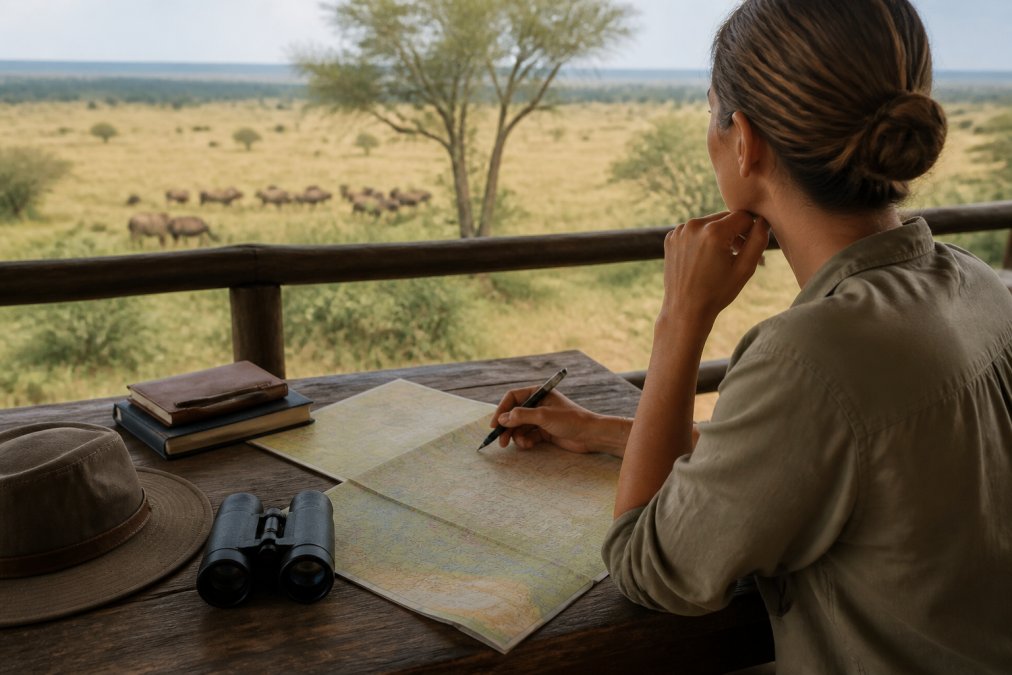
At Acacia African Safaris, this process begins with understanding what you actually want from the bush: whether that is watching a lion pride for three uninterrupted hours, sitting in silence at a waterhole at dusk, or following the wildlife migration across the Serengeti plains. The itinerary follows from that conversation, not the other way around.
(/plan-your-journey/) Experience Actually Means]
A tailor-made itinerary can prioritize exclusive safari camps with low occupancy, arrange bush flights between remote reserves, and schedule optional excursions like night safaris or bush dining that standard packages never include. Nothing is locked in until you say it is.
How It Differs from a Standard Package Tour
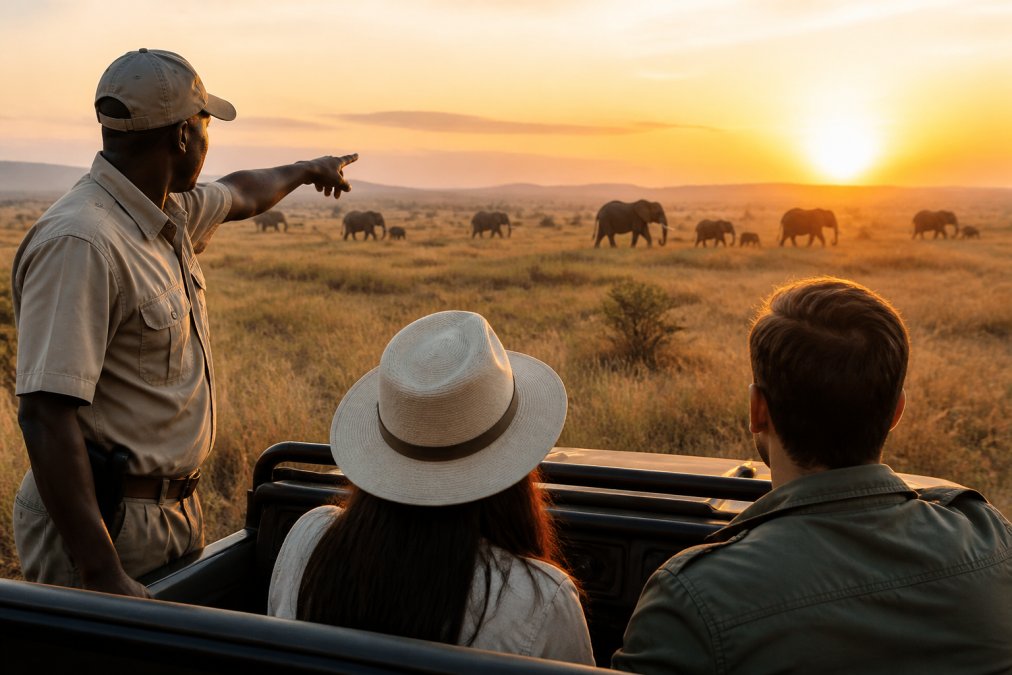
Standard package tours sell a fixed route to multiple groups, optimizing for efficiency and cost. A bespoke safari inverts this logic entirely. The itinerary adjusts to what is happening in the field. Guides with deep local knowledge can reroute a game drive based on fresh tracks, linger at a sighting as long as guests wish, and build in rest days for travelers who want to absorb the landscape rather than tick species off a list.
Bespoke itineraries also typically access properties not part of standard tour allocations, including private tented suites with panoramic views, exclusive-use camps, and lodges where the guest-to-guide ratio is deliberately kept low for a more immersive, personalized experience.
Private vs Group Safari: Pros and Cons Worth Knowing
Private safaris and group safaris serve genuinely different purposes. Neither is objectively better. The right choice depends on your travel style, group composition, and what you want from the experience.
| Factor | Private Safari | Group Safari |
|---|---|---|
| Itinerary control | Full flexibility | Fixed route and schedule |
| Pacing | Set by you | Set by group consensus |
| Wildlife viewing time | Unlimited at each sighting | Time-limited per stop |
| Guide attention | Dedicated, one group only | Shared across all guests |
| Cost per person | Higher | Lower |
| Social experience | Intimate, self-selected group | Meet other travelers |
| Best for | Milestone trips, families, solo luxury | Budget travelers, social travelers |
The clearest argument for a private safari is time at sightings. Group vehicles must balance the interests of multiple strangers. A private vehicle stays as long as guests want. For serious wildlife viewers, that difference is significant.
The honest limitation of a private bespoke experience is cost. A fully personalized safari with exclusive accommodation and a dedicated guide costs more per person than a shared group tour. That said, the pricing reflects what you are actually getting: a professional guide whose sole focus is your experience, accommodation chosen specifically for your preferences, and logistics managed end to end.
Solo travelers and couples can reduce per-person costs on a private safari by combining with one or two trusted friends. The per-person price drops considerably while the itinerary remains fully private and personalized.
Bespoke Safari Itinerary Examples for Different Travel Styles
The phrase “bespoke safari itinerary” means something different depending on who is traveling.
Anniversary and Honeymoon Itineraries
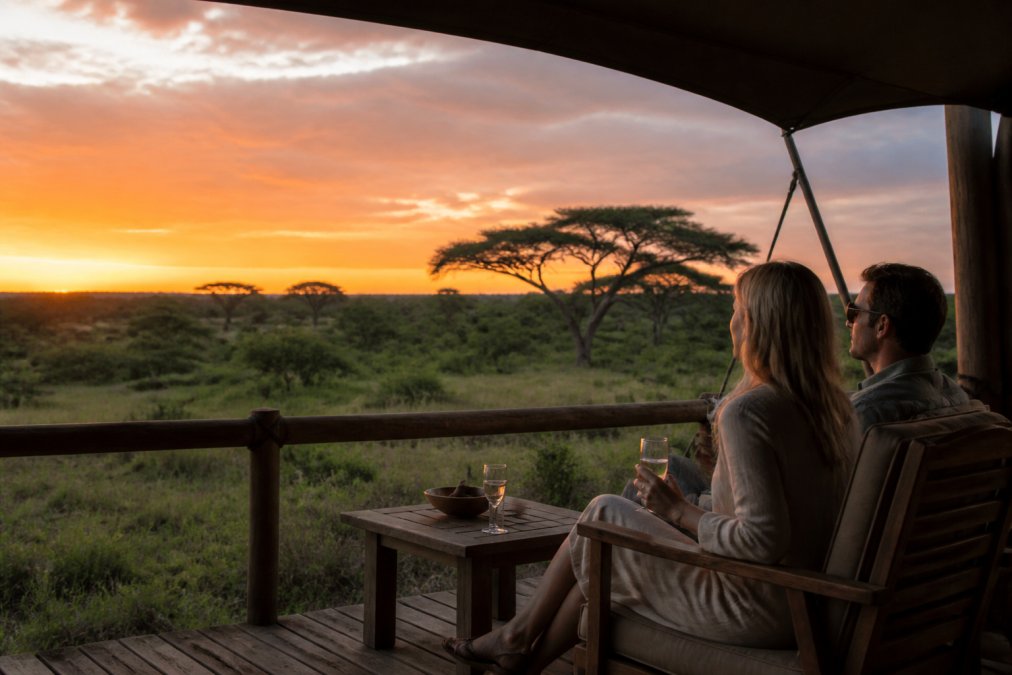
Milestone travelers typically want privacy, romance, and moments that feel genuinely singular. A well-designed anniversary or honeymoon itinerary might combine a few nights in an exclusive tented suite at a property like Whispering Acacia, where the private deck looks directly over a waterhole, with a sunrise game drive followed by a bush breakfast set up in the field by the camp team.
Itinerary design for couples usually prioritizes slow pacing over maximum destinations. Two or three locations, chosen for their complementary landscapes and wildlife, tend to create deeper immersion than a rushed five-destination circuit. A night safari, a sundowner by the river, or a cultural visit to a local community can transform a good trip into something genuinely memorable.
Family and Multi-Generational Expeditions
Families with teenagers or multi-generational groups spanning grandparents and grandchildren have needs that no single fixed itinerary can meet. A bespoke approach is a practical necessity.
An effective family safari itinerary balances activity levels across different ages. Younger guests might engage with guided bush walks and conservation education sessions, learning to read animal tracks or understand predator-prey dynamics in the field. Older family members may prefer longer game drives in a comfortable vehicle with good shade and flexible rest stops.
According to Tanzania National Parks Authority guidance on safari education programs, national parks in Tanzania actively support educational wildlife engagement for younger visitors, and many exclusive safari camps have developed junior naturalist programs specifically for this purpose.
Solo Traveler and Small Group Journeys
Solo travelers, particularly solo women traveling for the first time on a high-value trip, benefit from a bespoke safari’s dedicated structure. Safety, structure, and the quality of guide relationships matter enormously.
A solo bespoke safari places one dedicated guide with one guest. That relationship, built over several days in the field, is one of the most underrated aspects of the experience. Professional guides with deep local knowledge provide context, read the environment, and create genuine security in remote wilderness settings.
Solo travelers who book through generic online platforms often find that “private” simply means a shared vehicle with fewer people. Confirm explicitly that your vehicle, guide, and itinerary are dedicated exclusively to you before confirming any booking.
Best Time for a Bespoke Safari in East Africa
The best time for a bespoke safari in East Africa depends on what you most want to see, because the region’s wildlife calendar shifts significantly across the year.
The dry season, running roughly from late June through October, is widely regarded as the prime game viewing period. Vegetation thins, water sources concentrate, and animals gather in predictable locations. This is also when the Serengeti wildlife migration typically sees its most dramatic river crossings. As noted by Kenya Wildlife Service on seasonal safari planning, the concentration of wildlife during dry months creates exceptional conditions for extended wildlife viewing.
The green season, from November through May, offers a different kind of experience. Landscapes are lush, birdlife is extraordinary, and the bush has a particular quality of light that photographers often prefer. Crowds are lower, and many exclusive safari camps offer more flexible availability. For travelers whose bespoke itinerary prioritizes photography, solitude, or specific bird species, the green season is genuinely underrated.
Luxury Tailor-Made Safari Cost: What Shapes the Price
The luxury tailor-made safari cost varies considerably and depends on several interconnected factors. Acacia African Safaris does not publish fixed rates because the price of a bespoke safari is, by definition, built around your specific itinerary. For accurate pricing, request a personalized quote.
The main cost drivers on a bespoke safari:
- Accommodation tier: Exclusive private camps and tented suites with panoramic views cost significantly more than standard lodges.
- Duration: Most serious safari travelers find that fewer than seven nights does not allow enough time to genuinely settle into the rhythm of the bush.
- Destination combination: Some reserves carry higher park and conservation fees than others. Bush flights between remote locations add cost but save significant travel time.
- Group size: Per-person costs on a private safari decrease as group size increases.
- Season: Peak season dates, particularly around the wildlife migration, command premium rates at most exclusive camps.
- Optional excursions: Night safaris, bush dining, cultural visits, and specialist guided walks are typically priced as additions to the base itinerary.
A properly designed bespoke safari with exclusive accommodation and a dedicated professional guide is a significant investment. What you are paying for is a trip that cannot be replicated by anyone else, at any other time, in the same way.
Sustainability, Ethical Travel, and Logistical Complexity
Most travel guides treat sustainability as a footnote. On a bespoke safari, it should be a design principle.
The conservation model that sustains East Africa’s wildlife depends directly on high-value, low-volume tourism. Exclusive camps with small guest capacities generate conservation revenue without the environmental pressure of mass tourism. Choosing accommodation that operates within community-benefit frameworks, employs local guides, and contributes directly to anti-poaching efforts is part of what makes the ecosystem worth visiting in the first place.
As documented by IUCN sustainable tourism and protected areas guidelines, the link between responsible tourism revenue and long-term wildlife conservation in sub-Saharan Africa is well-established.
The logistical complexity of a tailor-made safari is also worth acknowledging honestly. Coordinating bush flights, multi-reserve itineraries, airport transfers, dietary requirements, and accommodation across different properties in remote areas is genuinely complicated. This is precisely why 24/7 contact support and a dedicated point of coordination matter. When something goes wrong on day one, the difference between a provider with real on-the-ground relationships and one operating from a website is immediately apparent.
Sustainability and logistical reliability are not separate concerns on a bespoke safari. The operators with the deepest conservation relationships tend to be the same ones with the strongest local logistics networks.
How to Plan a Bespoke Safari: Step-by-Step
Planning a bespoke safari follows a clear sequence. Rushing any of these stages tends to produce an itinerary that looks good on paper but does not reflect what you actually wanted.
Step 1: Define your core priorities [Time: 1-2 weeks of reflection]
Before speaking to any operator, get specific about what matters most. Wildlife migration timing, a particular landscape, privacy, educational depth for children, physical comfort levels, photography, or cultural encounters.
Step 2: Choose your specialist [Time: 1-2 weeks of research]
Look for operators with direct relationships with the camps and guides they recommend, not just an online booking interface. Ask how they handle logistics failures and who your point of contact will be during the trip.
Step 3: Build the itinerary collaboratively [Time: 2-4 weeks]
A good bespoke safari itinerary evolves through conversation. Expect to discuss destination sequencing, accommodation options, activity pacing, and optional excursions before anything is confirmed.
Step 4: Review accommodation in detail
Ask for specific room types, not just property names. A tented suite with a private deck and direct bush views is a fundamentally different experience from a standard room in the same camp. Confirm the guide-to-guest ratio for game drives.
Step 5: Confirm logistics end to end
Airport transfers, bush flight schedules, park entry arrangements, and communication protocols for emergencies should all be confirmed in writing before departure.
Step 6: Build in flexibility
The best bespoke itineraries have structure and room to move. Leave at least one unscheduled afternoon per destination. Some of the most memorable moments on safari happen when there is no plan to interrupt them.
| Planning Stage | Typical Timeframe | Key Decision |
|---|---|---|
| Define priorities | 1-2 weeks | Wildlife focus, pace, group needs |
| Choose specialist | 1-2 weeks | Direct relationships, logistics capability |
| Build itinerary | 2-4 weeks | Destinations, accommodation tier, excursions |
| Confirm logistics | 1 week | Transfers, flights, emergency contacts |
| Pre-departure prep | 1-2 weeks | Packing, visas, health requirements |
A bespoke safari experience is simply a trip built entirely around you, rather than a trip you are fitted into. The planning process takes longer, the cost is higher, and the result is categorically different from anything a fixed package can deliver.
Coordinating a truly personalized journey across multiple reserves, accommodation types, and logistical layers requires a specialist with real on-the-ground relationships, not just a booking platform. Acacia African Safaris designs every itinerary from a blank canvas, with completely personalized route planning, exclusive stays at properties like Whispering Acacia and The Singing Grass, seamless airport transfers, and 24/7 contact support throughout your trip. Request information from Acacia African Safaris and start building the safari experience that is actually yours.
Frequently Asked Questions
What is the difference between a group safari and a bespoke safari?
A group safari follows a fixed itinerary shared with strangers, with set departure dates, predetermined lodges, and a schedule that cannot change for individual guests. A bespoke safari is built entirely around you: your preferred wildlife interests, travel pace, accommodation style, and dates. The guide-to-guest ratio is far lower, game drives stop for as long as you choose, and every element from bush flights to bush dining is selected to match your priorities rather than a generic programme.
What should be included in a bespoke safari itinerary?
A well-designed bespoke safari itinerary should include airport transfers, a clear sequence of destinations with travel logistics between each (bush flights, road transfers), accommodation at verified luxury lodges or tented suites, daily game drives with professional guides, at least one curated experience such as a night safari or cultural visit, all-inclusive meal planning, and a 24/7 contact point for on-trip adjustments. Flexibility to modify routes based on wildlife migration patterns or personal preference is what separates a genuinely tailor-made itinerary from a repackaged group tour.
How much does a bespoke safari experience cost?
Pricing for a tailor-made safari varies considerably based on destination, duration, accommodation tier, group size, and the season you travel. Exclusive private camps and peak wildlife-viewing periods carry higher rates than shoulder-season stays at smaller properties. Rather than quoting a figure that may not reflect your specific requirements, the most accurate approach is to request a personalized quote from your safari specialist, who can build a cost breakdown around your exact itinerary, party size, and comfort expectations.
How do I choose the right bespoke safari operator?
Look for operators with direct relationships with the lodges and guides they recommend, not just a booking layer on top of third-party suppliers. Ask whether your itinerary is genuinely built from scratch or adapted from a standard template. Check whether they offer 24/7 in-trip support, can name specific professional guides, and have verifiable experience in your chosen destinations. Operators who ask detailed questions about your wildlife interests, travel pace, and any special requirements before quoting are generally the ones delivering a truly personalized experience.


