Table of Contents
- What Defines an Exclusive Night Safari Experience
- What Makes Luxury Safari Expensive
- Best Time for Night Game Drives in East Africa
- Nocturnal Wildlife You’ll Encounter
- Photography Tips for Low-Light Game Viewing
- Customizing Your 2026 Luxury Safari Itinerary
- Sustainable Wildlife Tourism and Ethical Considerations
- Conclusion
Last Updated: August 18, 2026
What Defines an Exclusive Night Safari Experience
An exclusive night safari experience is a curated wildlife viewing adventure conducted after dark in protected reserves or conservancies, designed to reveal the nocturnal behavior of animals rarely seen during daylight hours. Unlike standard daytime game drives, night safaris operate with specialized lighting, trained guides who understand nocturnal animal behavior, and often feature private vehicle access or small-group settings.
What makes these experiences “exclusive” hinges on three elements: access (private or near-private vehicle use), timing (flexibility to stay out as long as wildlife activity warrants), and expertise (guides trained specifically in nocturnal animal behavior). Many safari operators offer night drives as an add-on. Exclusive experiences treat them as the centerpiece of the journey.
What Makes Luxury Safari Expensive
Luxury safari pricing is built on infrastructure, expertise, and scarcity. A night safari at Sanctuary Olonana in the Maasai Mara costs more than a standard daytime package because the operation requires different vehicle fleet management, specialized guide training, and premium accommodation in prime wildlife zones.
Location is the largest cost driver. Properties situated on private stretches of rivers, like Sanctuary Olonana’s position on the Mara River, command premium rates because they offer wildlife concentration that public park access cannot match. You’re paying for a location where you’re statistically more likely to encounter predators.
Guide expertise represents the second major cost. A nocturnal specialist must understand heat signatures, animal movement patterns in darkness, and safety protocols for close encounters. Training this depth takes months. Operators like Serian, The Original justify their pricing through exclusive-use vehicle arrangements and guides who’ve logged thousands of night hours.
Accommodation quality involves design choices that compound costs significantly. Private verandas, premium bedding, en-suite bathrooms with heated water in remote locations, and around-the-clock staff presence all require infrastructure that basic lodges skip. All-inclusive pricing structures also affect headline costs by bundling meals, beverages, and game drives into one transparent figure.
Best Time for Night Game Drives in East Africa
The optimal window for nocturnal wildlife activity in East Africa runs from June through October, when cooler temperatures keep animals active later into the evening. This aligns with the dry season across Tanzania and Kenya, when vegetation is sparse and animals concentrate around water sources.
Moonless nights (new moon phases) offer the best conditions for spotting nocturnal species. Leopards, hyenas, and smaller mammals are more active when ambient light is lowest. However, photography becomes more challenging. If photography is your priority, waxing moon phases (first and second quarters) provide enough ambient light while still capturing nocturnal behavior.
Peak hours for night drives typically fall between 7:00 PM and 10:00 PM, when animals are most active immediately after sunset. Ol Pejeta Conservancy structures their night game drives around these windows, offering 7:00-9:00 PM and 9:00-11:00 PM departure times specifically to capture these active periods.
The shoulder months, May and November, can work well if you’re flexible. May offers lush vegetation that attracts herbivores and predators, while November brings the start of the short rains, triggering animal movement patterns. Avoid April and December, April is the heavy rain season when roads become impassable, and December marks the unpredictable transition into the dry season.
Season | Best For | Temperature | Wildlife Activity | Challenges |
|---|---|---|---|---|
June-October | Peak nocturnal viewing | 10-18°C | Highest | Crowded, premium pricing |
May, November | Flexible travelers | 15-22°C | Good | Variable weather |
January-March | Budget-conscious visitors | 18-28°C | Moderate | Less predictable sightings |
April, December | Avoid | Variable | Low | Heavy rain, impassable roads |
Nocturnal Wildlife You’ll Encounter
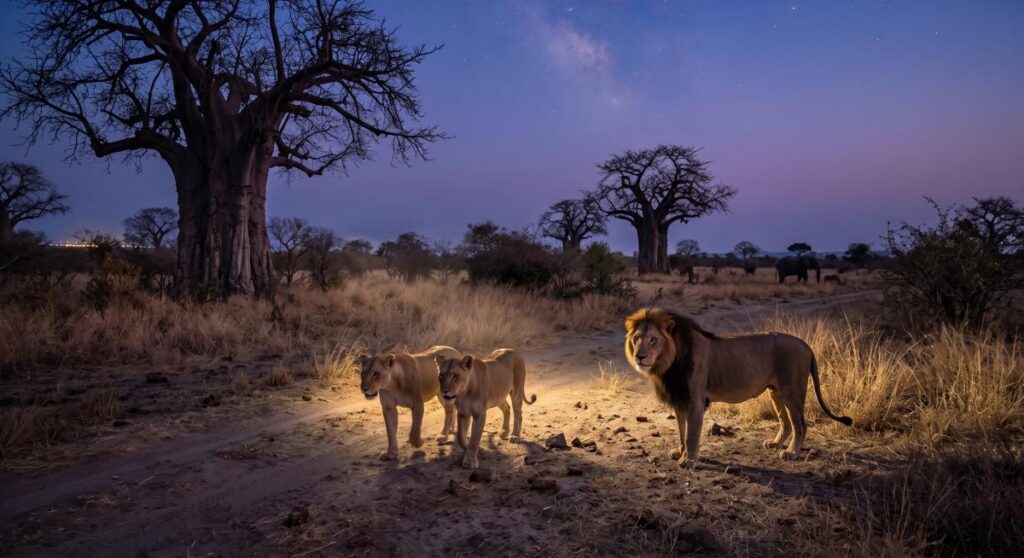
Leopards become active hunters in cool evening hours, and night drives offer your best chance to observe their stalking behavior. Hyenas shift from scavengers to active hunters at night, revealing pack behavior and hunting strategies that demonstrate their sophistication. In areas like the Mara, you might witness a hyena clan taking down a wildebeest.
Smaller carnivores dominate the nocturnal landscape. Genets, cat-like creatures with spotted coats and ringed tails, hunt rodents and insects with surprising agility. Civets forage for fruit and small animals. Both are virtually invisible during the day but become predictable subjects on night drives.
Galagos (bushbabies) are perhaps the most enchanting nocturnal sighting. These tiny primates with enormous eyes and powerful hind legs make bird-like calls and leap between branches with acrobatic precision. Their presence indicates healthy woodland habitat.
Larger herbivores behave differently at night. Elephants often move under cover of darkness to access water and feeding areas with less predation risk. Giraffes become more active during cooler night hours. Zebras and wildebeest shift their grazing patterns to take advantage of nocturnal vegetation growth.
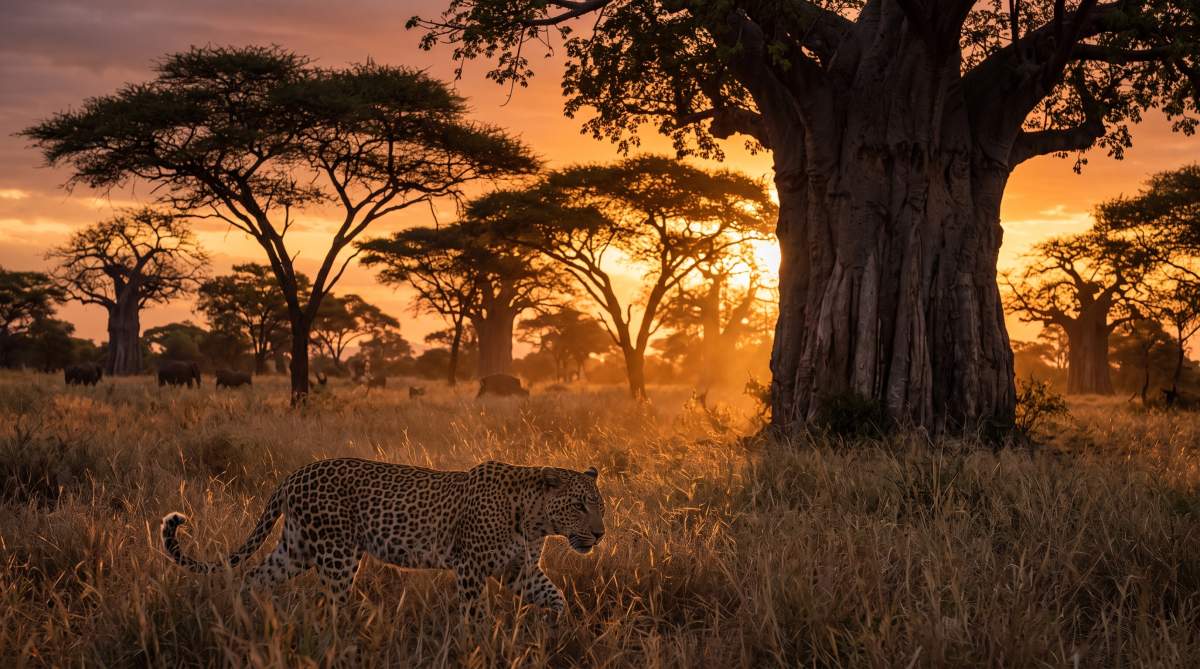
A leopard stalking through tall golden grass at dusk with warm amber light filtering through scattered acacia trees, muscles tensed mid-stride across the Tarangire savanna
Nocturnal bird activity also intensifies. Owls become vocal and active, and their calls provide a soundtrack to your drive. Pearl-spotted owlets, barn owls, and pearl-breasted owlets create an acoustic landscape revealing rodent prey density.
Photography Tips for Low-Light Game Viewing
Low-light photography requires different camera settings than daytime work. Start with ISO as your primary variable. Modern mirrorless and DSLR cameras handle ISO 3200-6400 with acceptable noise levels. For flagship bodies, pushing to ISO 12,800 is viable if you accept some grain in exchange for shutter speed.
Aperture matters intensely. A lens with f/2.8 or wider is substantially better than f/4 or f/5.6. The difference between f/2.8 and f/4 is roughly one stop of light, meaning you can drop your ISO by half. Bring your widest aperture lens.
Autofocus systems struggle in darkness. Pre-focus on where you expect the animal to move, then use manual focus or continuous autofocus with back-button focus activated. Some guides will position the vehicle so headlights create just enough ambient light for autofocus to lock onto the animal’s eyes.
Exposure compensation becomes your best friend. Set it to -1 or -1.5 stops to prevent your camera’s metering system from overexposing the darkness. Adjust based on your first shots.
Stabilization is non-negotiable. Use a bean bag or small tripod mount on the vehicle window. Even with high ISO and wide aperture, camera shake will ruin sharpness at 1/80th of a second.
Customizing Your 2026 Luxury Safari Itinerary
A truly exclusive night safari experience requires itinerary flexibility that standard packages can’t offer. Work with your guide to identify which conservancies are showing the best leopard or hyena activity during your travel dates. A flexible operator will adjust your schedule to position you in the right location when wildlife activity peaks.
Timing within each day becomes crucial. If your guide reports that nocturnal activity is strongest between 8:30 PM and 11:00 PM in a particular zone, your evening drive should depart at 7:45 PM. This requires accommodation properties that support flexible meal timing.
Consider building in “double activity” days where you do a daytime game drive in one zone and a night drive in another. This requires two vehicles and two guides, which increases costs but exponentially increases your wildlife encounter diversity.
Photography-focused itineraries should include at least two consecutive nights in the same location. Your first night is learning how your guide positions the vehicle and how your camera settings perform. Your second night, you’re actually capturing images.
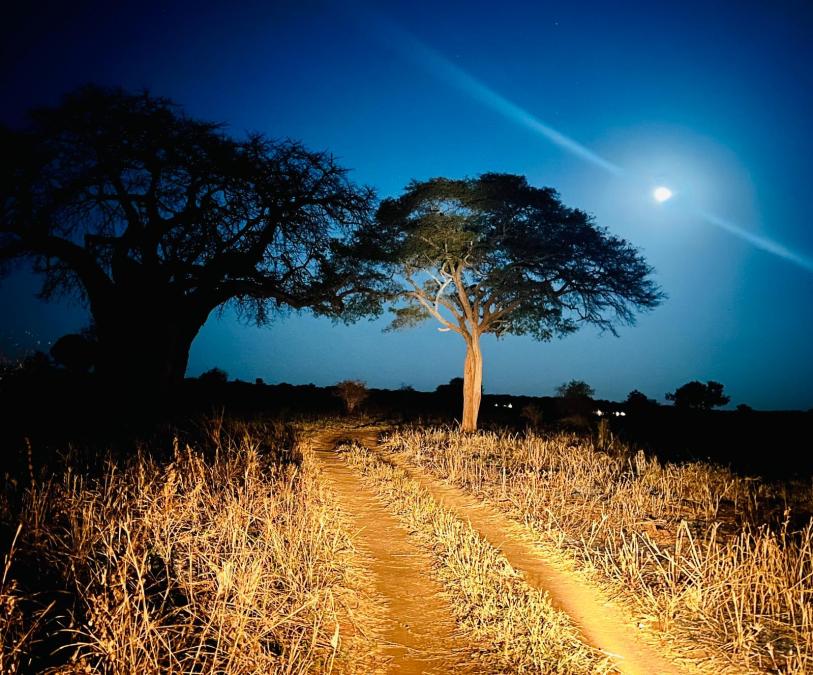
night drive path at Tarangire, with baobab and acacia tree guiding the path
Cultural and educational components deserve equal itinerary real estate as wildlife viewing. Structure time for keeper talks, conservation-focused sessions with your guide, or visits to research stations studying nocturnal animal behavior. These context-building activities transform wildlife sightings into deeper understanding.
Dietary and accessibility needs require advance planning. Inform your operator about any dietary restrictions, mobility limitations, or health considerations at the itinerary design stage. Night game drives in open vehicles expose you to temperature swings. Customized itineraries account for this with appropriate clothing recommendations and vehicle heating options.
Sustainable Wildlife Tourism and Ethical Considerations
Exclusive night safari experiences exist within a conservation framework increasingly important to discerning travelers. The difference between a safari that depletes wildlife and one that strengthens conservation comes down to operator practices.
Responsible night safari operators limit vehicle numbers in specific areas to prevent habituation and stress on animals. When too many vehicles surround a leopard or lion pride, the animals alter their natural behavior. Ethical operators maintain strict vehicle quotas and rotate access zones to allow recovery periods.
Guide training in animal welfare should be non-negotiable. Your guide should understand stress indicators in animal behavior, ear positioning, body posture, movement patterns that signal distress. A quality operator trains guides to recognize these signals and withdraw if an animal shows signs of stress.
Habitat protection funding is where your night safari fees directly support conservation. Many luxury operators work through conservancies where gate fees and tourism revenue directly fund anti-poaching efforts, habitat restoration, and community employment. Your fees actively strengthen protection for nocturnal predators facing intense poaching pressure.
Community benefit structures matter significantly. Ethical operators ensure that a meaningful portion of tourism revenue flows to local communities through employment, education funding, and conservation incentives. This alignment of economic interest with wildlife protection creates sustainable long-term conservation.
Ask your operator directly: What percentage of your fees support local communities? Which conservation organizations do you partner with? How do you limit vehicle numbers in wildlife viewing areas? Operators with strong conservation practices will answer with specific numbers and named partnerships.
Conclusion
Exclusive night safari experiences in 2026 represent the frontier of luxury travel because they demand operators who genuinely understand nocturnal wildlife behavior and prioritize flexibility over rigid scheduling. The difference between a night drive and a transformative nocturnal experience lies in personalization, guide expertise, and willingness to adjust your itinerary based on where animals are actually active.
Acacia African Safaris specializes in exactly this level of customization. With completely personalized itineraries, exclusive stays at properties like Whispering Acacia, and seamless 24/7 coordination, you get the flexibility to follow nocturnal wildlife activity rather than chase a predetermined schedule. Request information about how Acacia African Safaris can design your exclusive night safari itinerary around your specific interests, whether that’s leopard photography, behavioral observation, or conservation-focused learning experiences.
Frequently Asked Questions
What makes an exclusive night safari experience truly different from a standard daytime game drive?
An exclusive night safari experience prioritizes privacy, personalized pacing, and access to nocturnal animal behavior unavailable during daylight hours. Unlike shared daytime drives, exclusive experiences offer a private vehicle and guide who adjust the itinerary to your interests without pressure to move on. You’ll observe animals like leopards, hyenas, and bush babies at their most active, combined with stargazing and intimate wildlife encounters designed specifically for your group’s preferences and pace.
What wildlife can you see on an exclusive night game drive in East Africa?
Night game drives reveal elusive nocturnal species rarely seen during the day. Expect to encounter leopards hunting, hyenas on patrol, genets, civets, galagos (bush babies), and nocturnal birds. You’ll also observe different behaviors from daytime animals like elephants, lions, and zebras as they rest or move under cover of darkness. The specific species depend on your location—Tarangire and Lake Manyara offer distinct nocturnal wildlife compared to the Maasai Mara, with each habitat zone supporting unique predator and prey dynamics.
Is a night safari worth the premium cost for a 2026 luxury safari?
Yes, if you prioritize immersive wildlife encounters and unique experiences. An exclusive night safari adds 15-20% to your total safari cost but delivers something impossible to experience on standard daytime drives: nocturnal animal behavior, reduced crowds, and personalized exploration at your own pace. For milestone celebrations like anniversaries or family legacy trips, the exclusive access and intimate wildlife moments justify the investment. The value lies in the guided expertise, private vehicle, and conservation-focused experiences that standard packages cannot replicate.
How do I know a night safari operator prioritizes my safety and comfort?
Reputable operators provide 24/7 support before, during, and after your safari, with clear communication about vehicle safety features, guide qualifications, and emergency protocols. Ask about their guides’ experience with nocturnal game behavior and low-light navigation. Verify that vehicles have working spotlights, communication systems, and trained staff. Check for transparent booking confirmations, detailed itineraries, and flexible cancellation policies. Operators like Acacia African Safaris emphasize seamless coordination with dedicated support contacts, so you have direct access to assistance if any concerns arise.


